
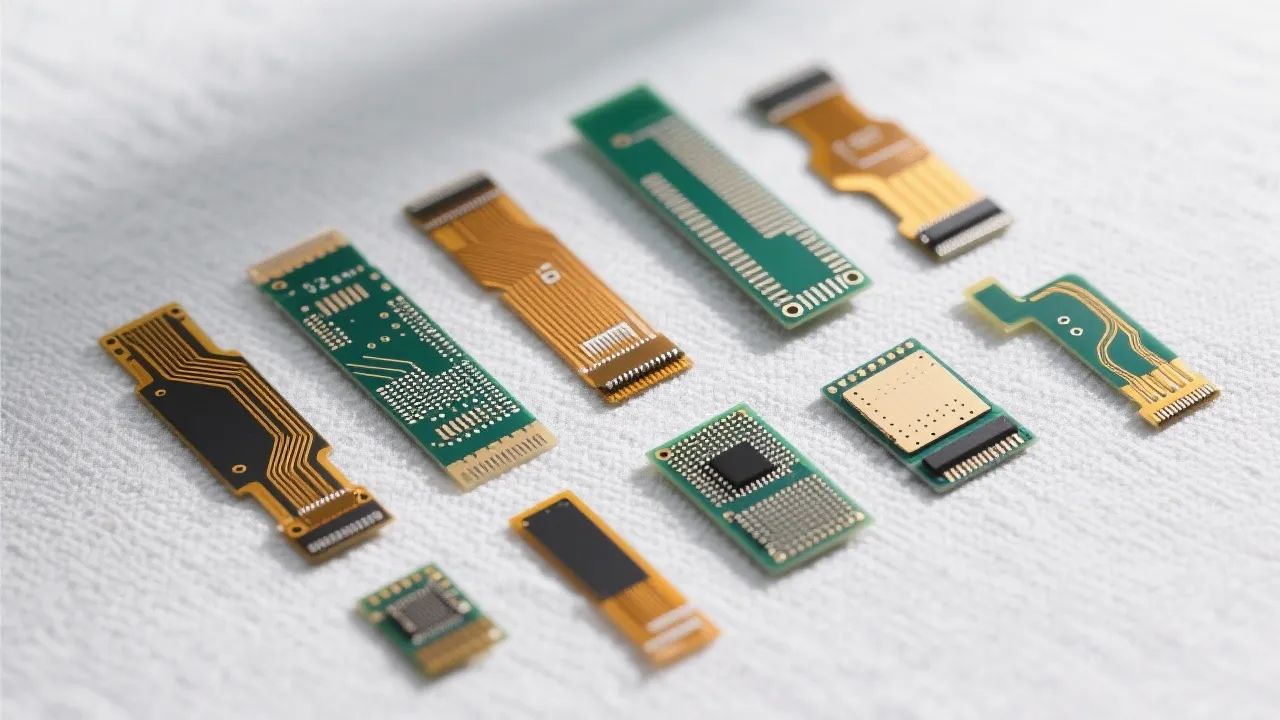
In recent years, smartphone manufacturers have reported a noticeable rise in solder joint failures—especially in high-density flexible printed circuit boards (FPCs). What’s often overlooked? The surface finish.
ENIG (Electroless Nickel Immersion Gold) has emerged as the preferred solution for applications demanding both signal integrity and long-term reliability—from consumer electronics to aerospace systems. But why?
ENIG involves two key steps: electroless nickel plating followed by immersion gold deposition. For optimal performance, the nickel layer should be precisely 2 μm thick, with uniform coverage across all pads and traces—even on micro-vias and fine-pitch lines (down to 0.1 mm).
This precise control ensures consistent wetting during reflow soldering—a critical factor in preventing voids, cold joints, or incomplete connections that plague modern FPC designs.
Not all ENIG finishes are equal. Here's what matters most:
These parameters directly influence mechanical strength of solder joints—measured in pull-test values up to 12N for well-controlled ENIG versus 6–8N for OSP-treated boards.
| Surface Finish | Micro-Trace Compatibility | Reflow Stability |
|---|---|---|
| OSP | Low – oxidizes quickly | Poor – limited shelf life |
| HASL | Moderate – uneven coating | Fair – risk of solder balling |
| ENIG | High – excellent uniformity | Excellent – stable over time |
For example, Ruiheng PCB’s ENIG process enables consistent 50Ω differential impedance control in multi-layer FPCs—essential for high-speed data transmission in 5G devices.
Have you ever experienced signal degradation due to poor surface treatment? You're not alone. Many engineers report intermittent connectivity issues after assembly when using less robust finishes like OSP.
 350
|
350
|
 High - speed multilayer PCB
Impedance control
5G communication PCB
Signal integrity
High - frequency PCB manufacturing
274
|
high-speed multilayer PCB impedance control
PCB impedance measurement techniques
AOI inspection technology
5G PCB design
high-frequency PCB manufacturing
227
|
high-precision FPC design
2mil trace width
4-layer flexible PCB
ENIG surface finish
impedance control
283
|
4-layer heavy copper PCB design
power electronics thermal management
thick copper PCB line spacing
ENIG surface finish
high Tg FR-4 application
157
|
multilayer flexible pcb via design
micro-hole processing in fpc
high-density flex pcb layout
emc optimization in flexible circuits
flexible pcb manufacturing process
High - speed multilayer PCB
Impedance control
5G communication PCB
Signal integrity
High - frequency PCB manufacturing
274
|
high-speed multilayer PCB impedance control
PCB impedance measurement techniques
AOI inspection technology
5G PCB design
high-frequency PCB manufacturing
227
|
high-precision FPC design
2mil trace width
4-layer flexible PCB
ENIG surface finish
impedance control
283
|
4-layer heavy copper PCB design
power electronics thermal management
thick copper PCB line spacing
ENIG surface finish
high Tg FR-4 application
157
|
multilayer flexible pcb via design
micro-hole processing in fpc
high-density flex pcb layout
emc optimization in flexible circuits
flexible pcb manufacturing process












-L4-4.png?x-oss-process=image/resize,m_fill,h_800,w_800/format,webp)