
As flexible printed circuit boards (FPCs) become increasingly prevalent in compact devices—from wearables to medical implants—the need for robust signal integrity and electromagnetic compatibility (EMC) has never been more critical. Engineers face real-world challenges such as crosstalk, impedance mismatch, and manufacturing constraints that directly impact product reliability.
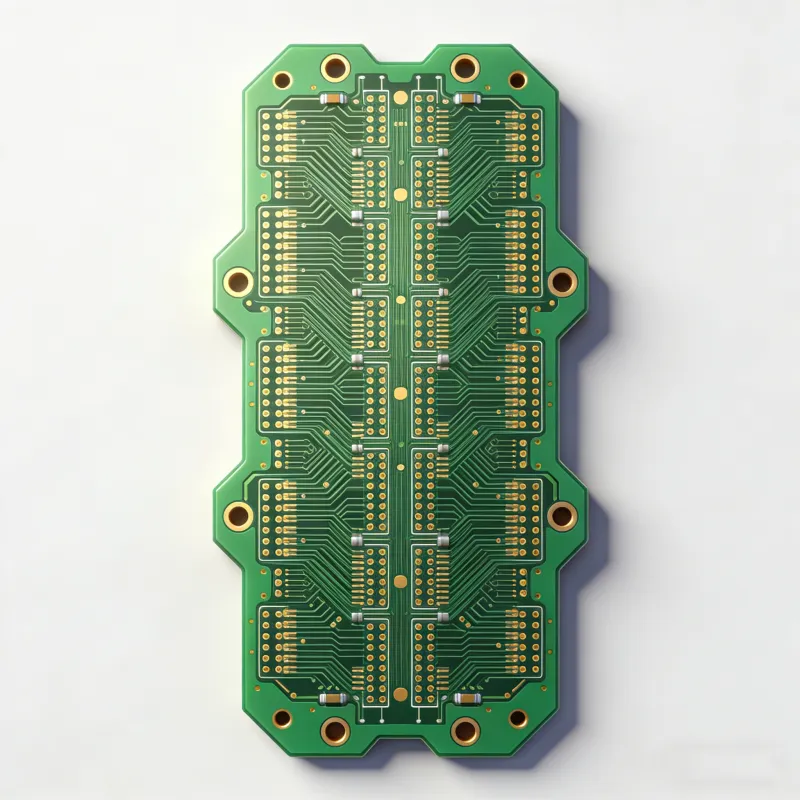
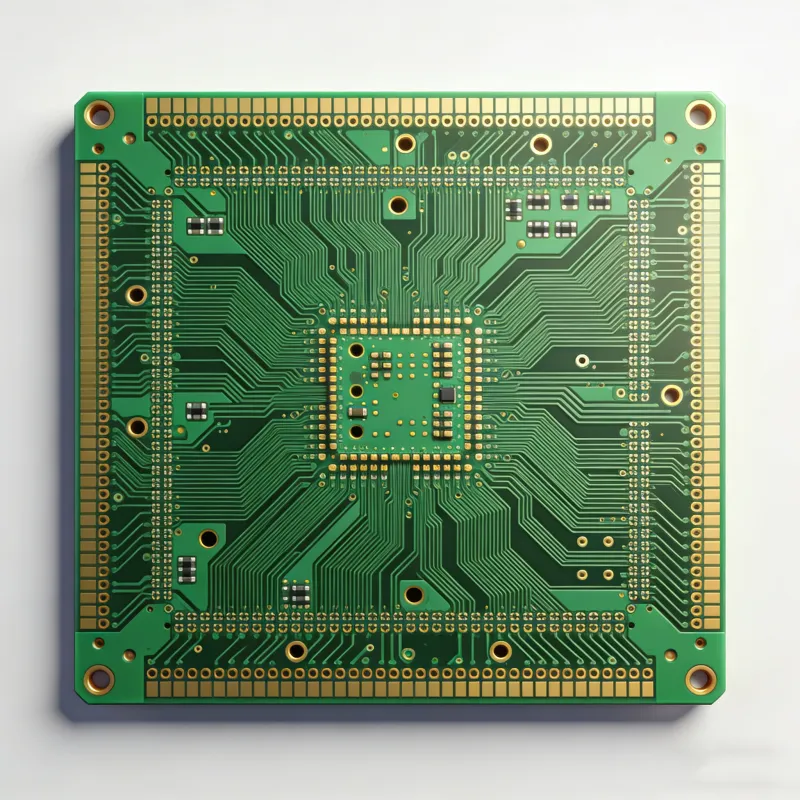
In multi-layer FPC designs, maintaining a minimum trace-to-trace spacing of 0.1mm is essential to reduce capacitive coupling between adjacent signals. According to IPC-2141 standards, this spacing helps maintain consistent characteristic impedance across high-speed data lines (e.g., USB 3.0 or MIPI). For double-sided layouts, placing ground planes beneath sensitive signal layers can suppress common-mode noise by up to 30%, based on simulation results from Ansys HFSS models.
Overvia design also plays a pivotal role. Using staggered via patterns instead of direct vertical stacking reduces parasitic inductance—critical for power delivery networks in mobile devices where transient spikes must be minimized. A case study from a leading IoT manufacturer showed that optimizing via placement improved signal eye diagram margins by over 25% at 1 Gbps speeds.
While theoretical designs may call for sub-0.1mm features, actual production capabilities matter. Most modern FPC manufacturers now support minimum hole diameters of 0.2mm and line widths/spacing of 0.1mm/0.1mm, enabling true high-density integration without sacrificing yield. This capability allows designers to push the envelope while ensuring manufacturability—a key differentiator in competitive markets like consumer electronics and healthcare tech.
Additionally, folding zones in FPCs experience mechanical stress during assembly and use. Studies show that repeated bending at 90° angles can lead to microcracks in copper traces after ~10,000 cycles. To mitigate this, engineers should avoid placing critical traces near fold lines and consider using polyimide-based substrates with enhanced flex life (tested to >50,000 cycles).
EMC compliance isn’t just about passing regulatory tests—it’s about building trust with end users. Devices that emit excessive EMI can interfere with nearby sensors, wireless modules, or even hospital equipment. Implementing differential signaling, proper grounding schemes, and shielding techniques not only meets FCC Part 15 or EN 55022 requirements but also enhances overall system stability.
For example, one client reduced radiated emissions by 18 dBμV/m through a combination of guard rings around analog circuits and controlled impedance routing. The result? A smoother certification process and fewer field failures—a win-win for both R&D and customer satisfaction.
Pro Tip: Always simulate your layout before prototyping. Tools like Cadence Allegro or Altium Designer offer built-in SI/PI analysis modules that help identify potential issues early—saving time and reducing costly redesigns later.
Whether you're designing a new wearable device or upgrading an existing medical instrument, mastering these principles ensures your FPC performs reliably under real-world conditions—not just in the lab.
Explore our comprehensive suite of services—from concept to mass production—with expert guidance tailored to your project needs.
Get a Free Design Review Today 402
|
402
|
 FPC high-density routing
flexible circuit board design tips
EMC optimization
high-density PCB trace spacing
flexible printed circuit manufacturing
291
|
high-speed multilayer PCB
impedance control
5G communication module
high-frequency PCB design
signal integrity
412
|
double layer PCB rapid manufacturing
PCB surface finishing technologies
flying probe testing
PCB production process
electrical reliability testing
459
|
Multilayer FPC Via Design
FPC Bend Area Stress
Flexible Circuit Design
High-Density FPC Routing
FPC Reliability Enhancement
FPC high-density routing
flexible circuit board design tips
EMC optimization
high-density PCB trace spacing
flexible printed circuit manufacturing
291
|
high-speed multilayer PCB
impedance control
5G communication module
high-frequency PCB design
signal integrity
412
|
double layer PCB rapid manufacturing
PCB surface finishing technologies
flying probe testing
PCB production process
electrical reliability testing
459
|
Multilayer FPC Via Design
FPC Bend Area Stress
Flexible Circuit Design
High-Density FPC Routing
FPC Reliability Enhancement
-4.png?x-oss-process=image/resize,h_800,m_lfit/format,webp)
-1.png?x-oss-process=image/resize,h_800,m_lfit/format,webp)







-L4-4.png?x-oss-process=image/resize,m_fill,h_800,w_800/format,webp)
-1.png?x-oss-process=image/resize,m_fill,h_800,w_800/format,webp)
-4.png?x-oss-process=image/resize,m_fill,h_800,w_800/format,webp)