
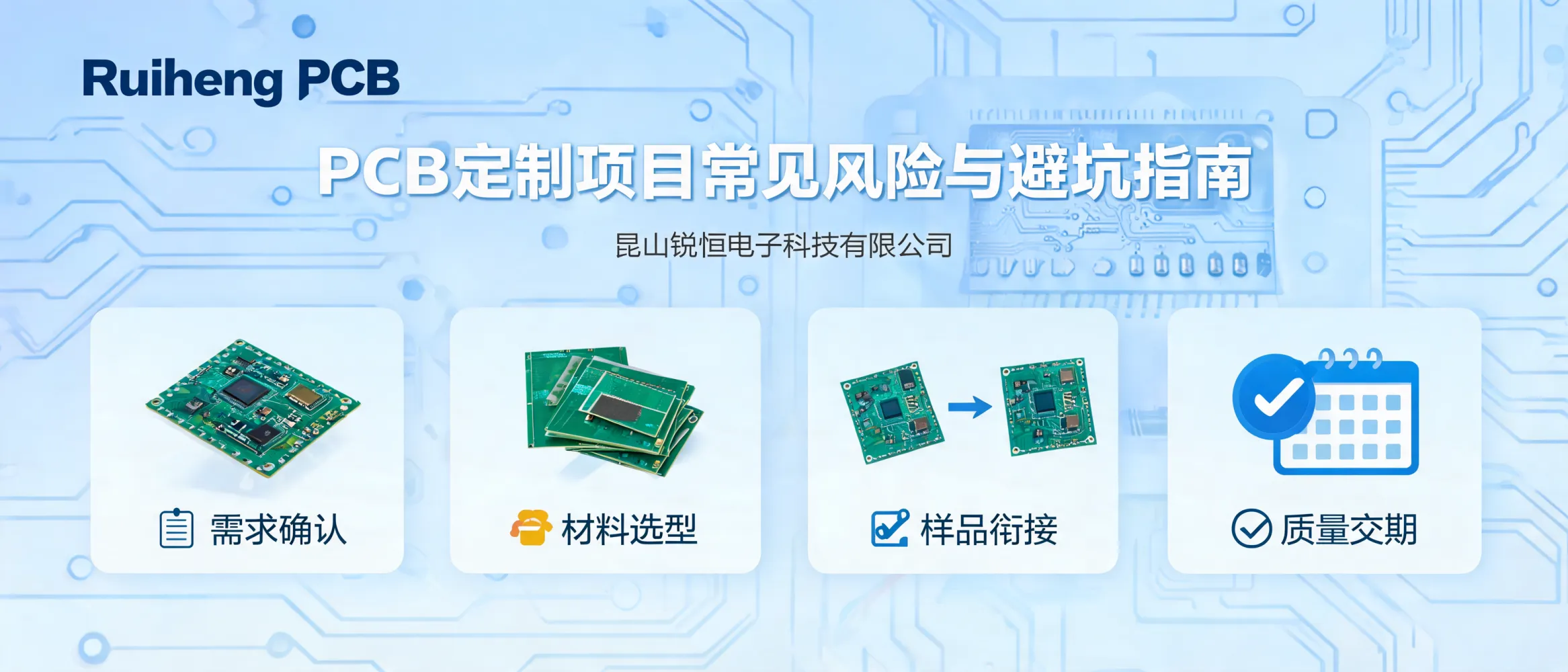
Kunshan Ruiheng Electronic Technology Co., Ltd.
In PCB sourcing, project success depends not only on the board design itself, but also on how clearly requirements are defined, how materials and structures are confirmed, and how smoothly the transition from prototype to mass production is managed. As a manufacturer focused on rigid PCB (FR-4) and flexible PCB (PI / polyimide), Kunshan Ruiheng Electronic Technology Co., Ltd. supports B2B customers with practical manufacturing insight for more reliable project planning.
Customized PCB projects often involve multiple technical and communication checkpoints. When one step is unclear, the result may affect lead time, consistency, or final fit in the end product. For buyers, the key challenge is not simply choosing a supplier, but confirming that the manufacturing approach matches the actual application.
Typical risk areas include: requirement definition, material confirmation, structural verification, sample-to-production consistency, quality standard alignment, and delivery communication.
One of the most common risks in PCB customization is incomplete or ambiguous requirement input. This may involve layer structure, board thickness, copper weight, surface finish, tolerance expectations, or specific application constraints. If these details are not clarified early, the project may require repeated confirmation later.
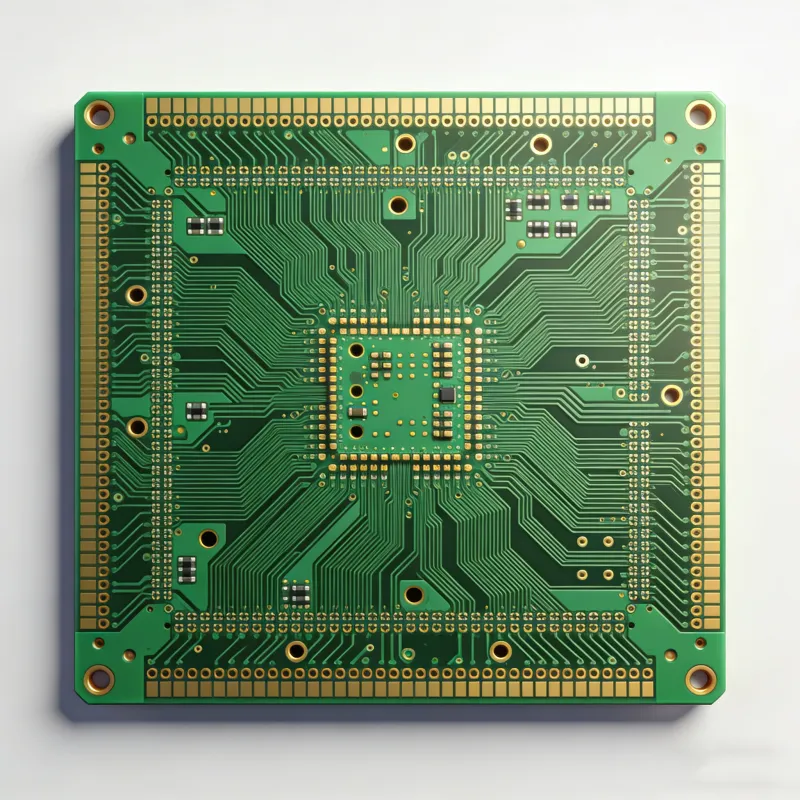
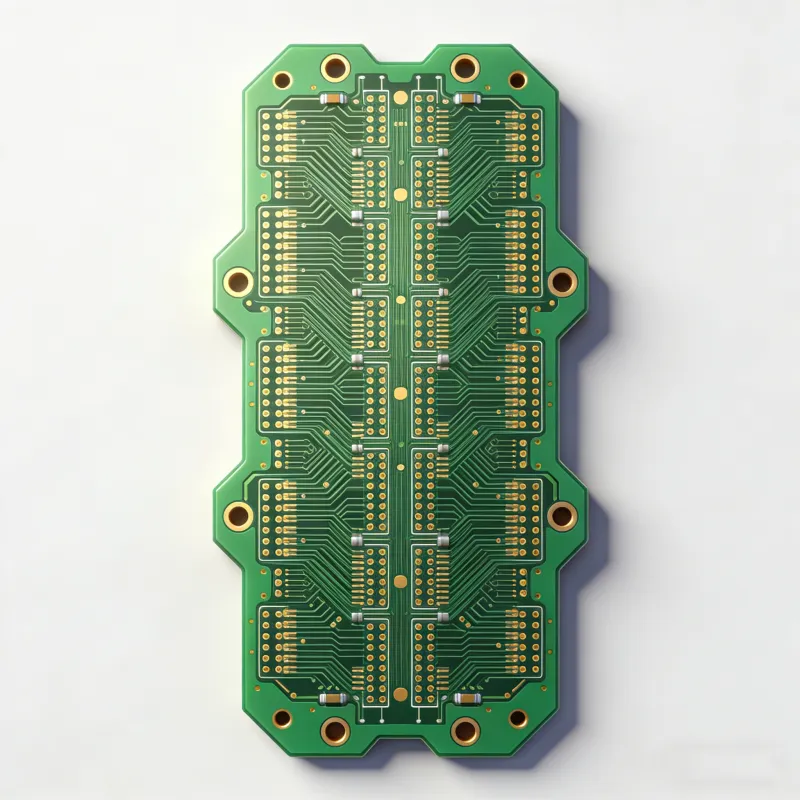
For rigid PCB projects, FR-4 is widely used, but the final result still depends on matching the right laminate, stack-up, and process parameters. For flexible PCB projects, PI material selection, bend requirement, and mechanical structure confirmation are especially important. If material and structure are not aligned with the product environment, the finished board may not meet expectations.
Focus on substrate selection, layer count, hole quality, dimensional stability, and process consistency for reliable assembly and use.
Focus on PI material, bending zone design, structural reliability, and the balance between flexibility and durability.
A sample that performs well does not automatically guarantee the same outcome in mass production. Changes in order quantity, process routing, panel utilization, or production scheduling may introduce variation if the transition is not managed carefully.
To reduce this risk, keep the prototype specifications, approved materials, and production requirements consistent across all stages of the project.
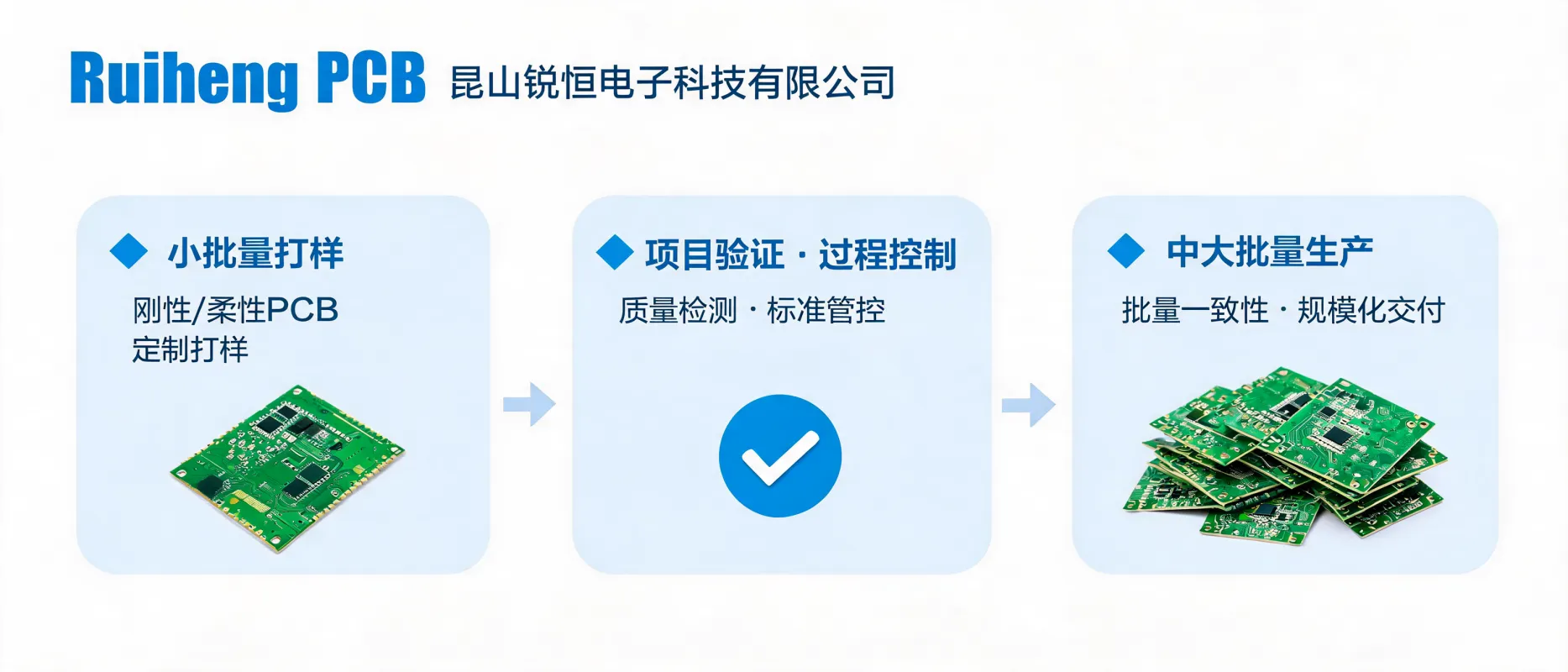
Kunshan Ruiheng Electronic Technology Co., Ltd. supports projects ranging from small-batch prototyping to medium- and large-batch production, helping customers maintain continuity from validation to delivery.
Another common issue is the lack of a shared understanding of quality standards. For B2B procurement, “acceptable quality” must be defined with measurable criteria, such as visual appearance, electrical performance, dimensional tolerance, and consistency requirements.
Lead time management is often affected by incomplete communication on priorities, schedule changes, or shipment expectations. In international sourcing, this becomes even more important because buyers may coordinate multiple teams across regions and time zones.
A reliable delivery process depends on clear order status updates, practical planning, and timely confirmation at each key stage. For customers sourcing from markets such as Europe, North America, Southeast Asia, and the Middle East, stable communication supports smoother project execution and better supply coordination.
Share the application scenario, board type, technical parameters, and any special constraints before quotation or sampling.
Align the PCB structure with the actual use condition, especially for rigid PCB and flexible PCB projects.
Maintain consistency in approved specifications so that sample validation can be translated into repeatable production.
Set acceptance standards and communication checkpoints early to reduce avoidable revisions and scheduling confusion.
Kunshan Ruiheng Electronic Technology Co., Ltd. focuses on the research, production, and export of rigid PCB and flexible PCB solutions. With advanced equipment, a strict quality management system, and an experienced engineering team, the company helps B2B customers move from concept to production with greater clarity.
For sourcing teams seeking a reliable PCB solution, the most effective approach is not only to compare price or lead time, but also to evaluate whether the supplier can help manage technical risks, maintain consistency, and support customized requirements with practical manufacturing discipline.
 227
|
227
|
 Kunshan Ruiheng
consumer electronics PCB
rigid PCB
flexible PCB
lightweight design
110
|
Kunshan Ruiheng Electronic Technology Co., Ltd.
rigid PCB
flexible PCB
FR-4
PI polyimide
PCB applications
433
|
Kunshan Ruiheng
PCB selection
consumer electronics
rigid PCB
flexible PCB
217
|
Kunshan Ruiheng Electronic Technology Co., Ltd.
PCB supplier selection
PCB prototyping
batch production
quality management system
328
|
Kunshan Ruiheng Electronic Technology Co., Ltd.
high-reliability PCB
process control
quality management system
engineering capability
Kunshan Ruiheng
consumer electronics PCB
rigid PCB
flexible PCB
lightweight design
110
|
Kunshan Ruiheng Electronic Technology Co., Ltd.
rigid PCB
flexible PCB
FR-4
PI polyimide
PCB applications
433
|
Kunshan Ruiheng
PCB selection
consumer electronics
rigid PCB
flexible PCB
217
|
Kunshan Ruiheng Electronic Technology Co., Ltd.
PCB supplier selection
PCB prototyping
batch production
quality management system
328
|
Kunshan Ruiheng Electronic Technology Co., Ltd.
high-reliability PCB
process control
quality management system
engineering capability






-4.png?x-oss-process=image/resize,m_fill,h_800,w_800/format,webp)
-L4-4.png?x-oss-process=image/resize,m_fill,h_800,w_800/format,webp)

-1.png?x-oss-process=image/resize,m_fill,h_800,w_800/format,webp)