Choosing between rigid PCB and flexible PCB depends on product space, assembly method, mechanical stress, and long-term reliability requirements. At Kunshan Ruiheng Electronic Technology Co., Ltd., we focus on both FR-4 rigid boards and PI flexible boards to support B2B customers with practical PCB options for different design and manufacturing needs.
As a manufacturer rooted in the East China PCB industrial cluster, Ruiheng combines engineering experience, production capability, and quality control to supply boards for small-batch prototyping as well as medium- to large-volume production. For global buyers, understanding the differences between rigid and flexible PCB is an important step toward selecting the right structure for the final product.
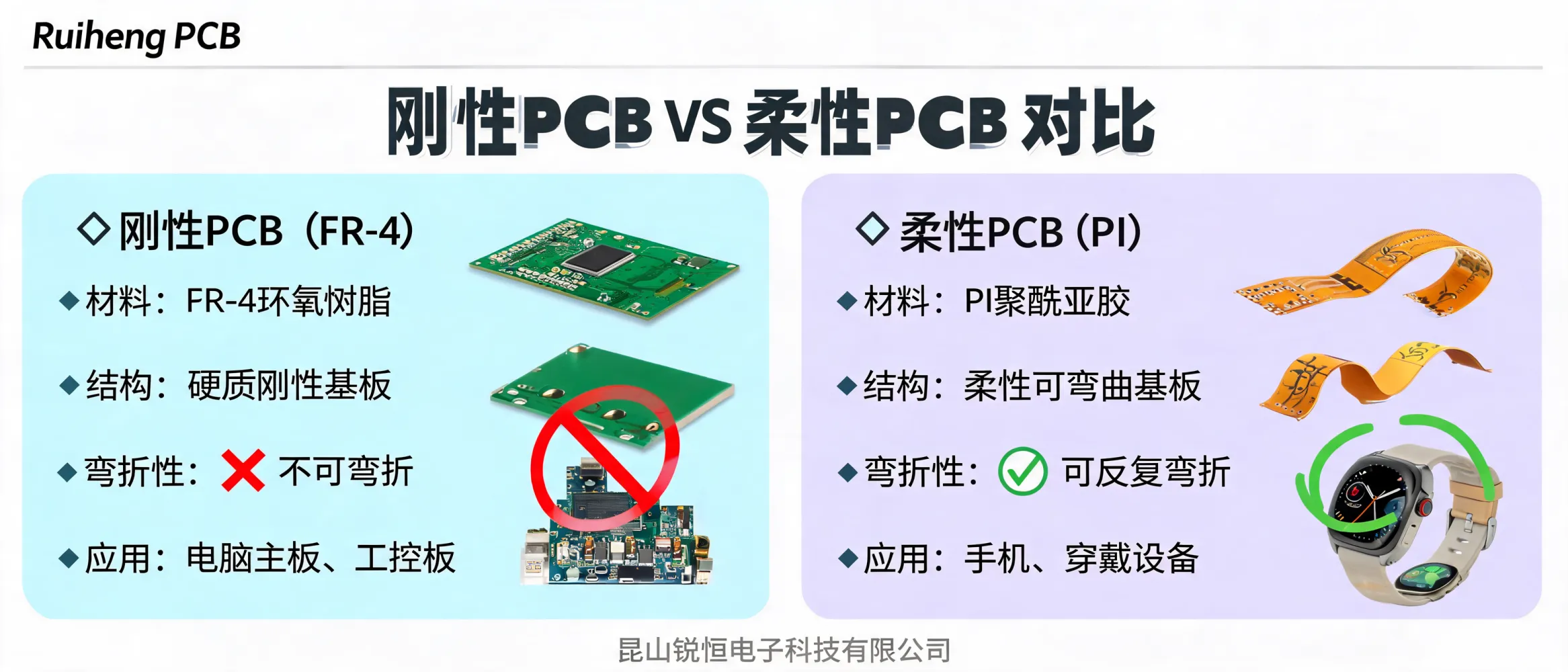
The main difference lies in the base material and mechanical behavior. A rigid PCB is made with a stable substrate such as FR-4, which keeps its shape after fabrication. A flexible PCB is built on PI (polyimide) material, allowing the circuit to bend and fit into compact or moving assemblies.
Both types can carry electronic circuits, but they serve different product architectures. Rigid boards are typically preferred where structural strength and dimensional stability are important. Flexible boards are selected where routing space is limited, weight reduction matters, or repeated bending is part of the application.
| Item | Rigid PCB | Flexible PCB |
|---|---|---|
| Typical material | FR-4 laminate | PI / polyimide |
| Mechanical property | Keeps a fixed shape | Can bend and fold within design limits |
| Design focus | Stability, support, consistent assembly | Space saving, routing flexibility, movement tolerance |
| Common use direction | Boards that need rigid support and stable mounting | Compact assemblies and products with dynamic movement |
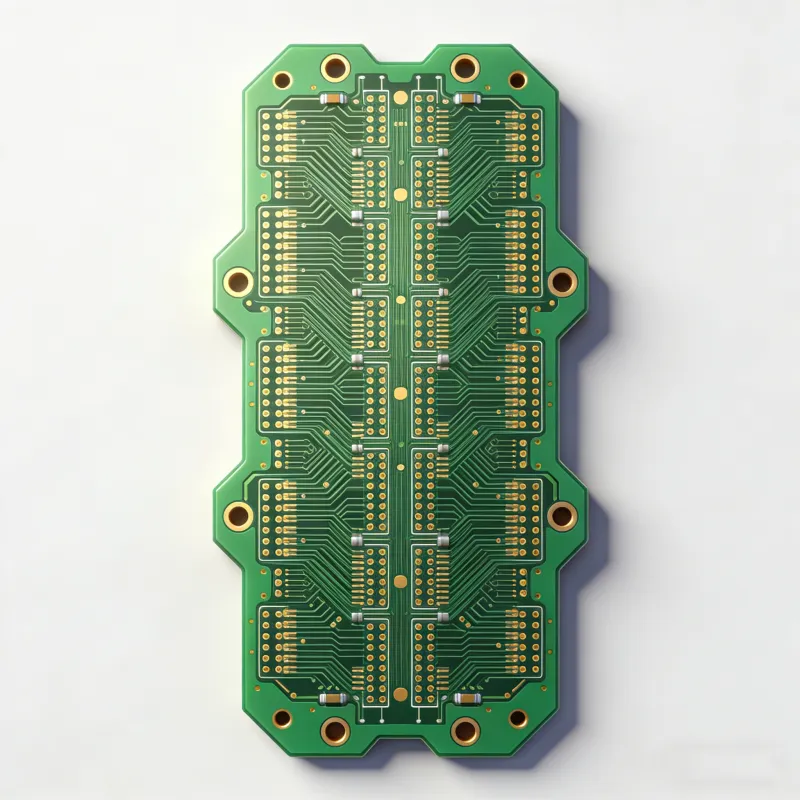
Rigid PCB is widely used when the board must stay flat, support components securely, and maintain dimensional accuracy during assembly and operation. FR-4 provides a dependable structure for general electronic applications, making it suitable for products that prioritize stability and repeatable manufacturing.
Flexible PCB is used where the circuit needs to fit into narrow spaces, connect moving sections, or reduce the number of interconnect parts. PI material offers bending capability that helps engineers design lighter and more compact products while keeping circuit routing efficient.
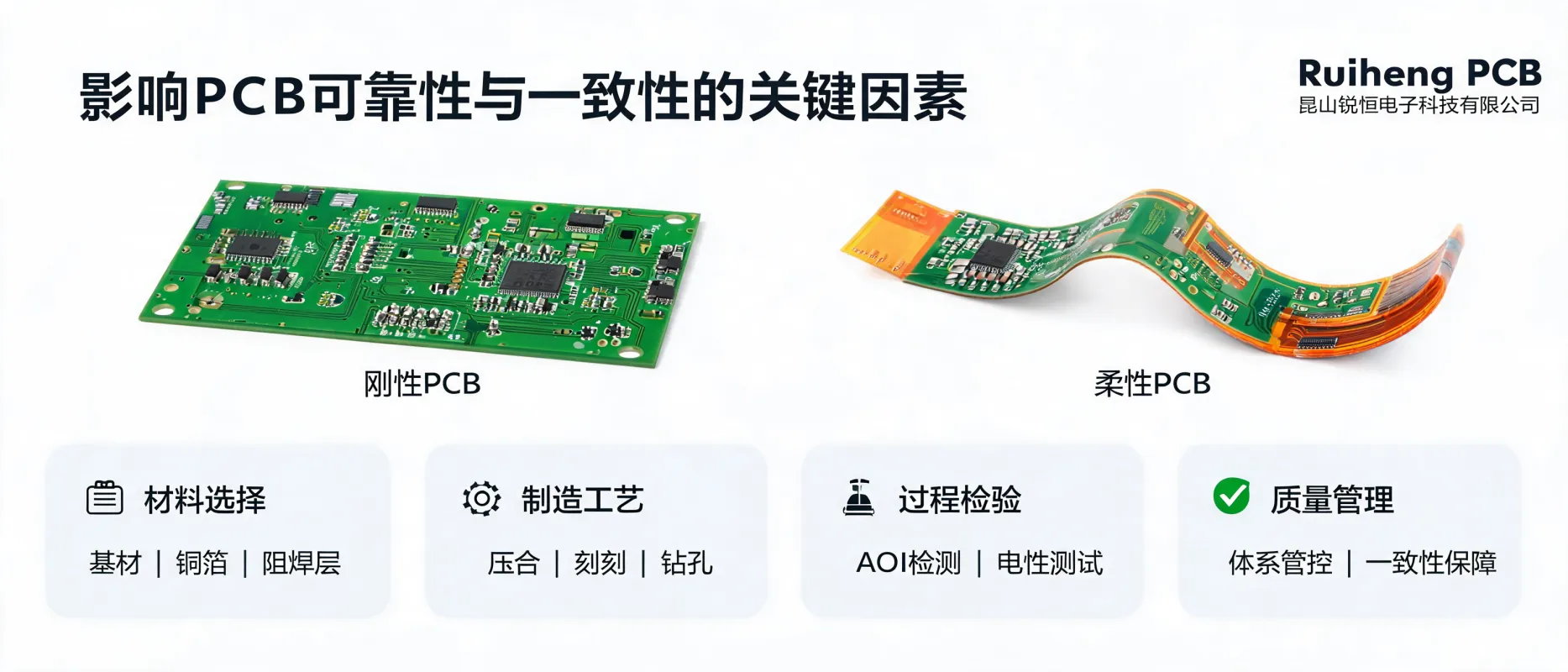
When selecting between rigid and flexible PCB, buyers usually evaluate not only material choice but also manufacturing complexity, assembly flow, and reliability expectations. Ruiheng supports customized production requirements with a focus on consistency and process control.
Rigid PCB is commonly selected for products that require a solid circuit foundation, stable component placement, and predictable processing during mass production.
Flexible PCB is often used for designs where the circuit must bend, fold, or adapt to non-traditional product shapes and limited internal spaces.
Kunshan Ruiheng Electronic Technology Co., Ltd. serves international B2B customers across Europe, North America, Southeast Asia, and the Middle East with rigid PCB and flexible PCB solutions. The company’s value lies in combining technical capability, quality management, and export-oriented service to support reliable sourcing decisions.
Our team focuses on practical communication, engineering support, and manufacturing consistency. This helps customers align board selection with product requirements before production starts, reducing uncertainty in structure, reliability, and supply planning.
“Quality as the foundation, technology as the driver” is reflected in the way we approach PCB manufacturing: clear material selection, controlled process execution, and attention to customer-specific requirements.
If your design requires structural stability, straightforward assembly, and a proven material system, rigid PCB is often the practical choice. If your product demands bending, folding, or compact routing in a limited enclosure, flexible PCB may be more appropriate. In many projects, the correct answer depends on how the board will be installed, used, and stressed over time.
For buyers evaluating rigid PCB vs flexible PCB, Ruiheng provides a manufacturing perspective that helps translate design intent into a feasible board solution. Whether the project starts with FR-4 rigid boards or PI flexible boards, the goal remains the same: a reliable PCB structure that matches the application.
 55
|
55
|
 Kunshan Ruiheng
small-batch prototyping
medium-to-high volume production
pilot run
PCB collaboration
244
|
24 layer high frequency pcb design
pcb trace width optimization
signal integrity in multilayer pcb
impedance control in high frequency pcb
3mil trace pcb manufacturing
144
|
Kunshan Ruiheng Electronic Technology Co., Ltd.
PCB custom delivery
small-batch prototyping
mid-volume production
batch consistency
64
|
FR-4 PCB
PI flexible PCB
selection guide
consumer electronics PCB
Kunshan Ruiheng Electronic Technology Co., Ltd.
77
|
Ruiheng Electronics
rigid PCB
flexible PCB
FR-4
PI polyimide
Kunshan Ruiheng
small-batch prototyping
medium-to-high volume production
pilot run
PCB collaboration
244
|
24 layer high frequency pcb design
pcb trace width optimization
signal integrity in multilayer pcb
impedance control in high frequency pcb
3mil trace pcb manufacturing
144
|
Kunshan Ruiheng Electronic Technology Co., Ltd.
PCB custom delivery
small-batch prototyping
mid-volume production
batch consistency
64
|
FR-4 PCB
PI flexible PCB
selection guide
consumer electronics PCB
Kunshan Ruiheng Electronic Technology Co., Ltd.
77
|
Ruiheng Electronics
rigid PCB
flexible PCB
FR-4
PI polyimide







-L4-4.png?x-oss-process=image/resize,m_fill,h_800,w_800/format,webp)
-1.png?x-oss-process=image/resize,m_fill,h_800,w_800/format,webp)
-4.png?x-oss-process=image/resize,m_fill,h_800,w_800/format,webp)