Rigid PCB and Flexible PCB: Key Differences in Structure, Materials and Applications
Kunshan Ruiheng Electronic Technology Co., Ltd.
2026-08-09
Concept Explanation
Kunshan Ruiheng explains the differences between rigid PCB and flexible PCB, including FR-4 and PI materials, structural features, processing considerations, and typical applications for PCB selection.
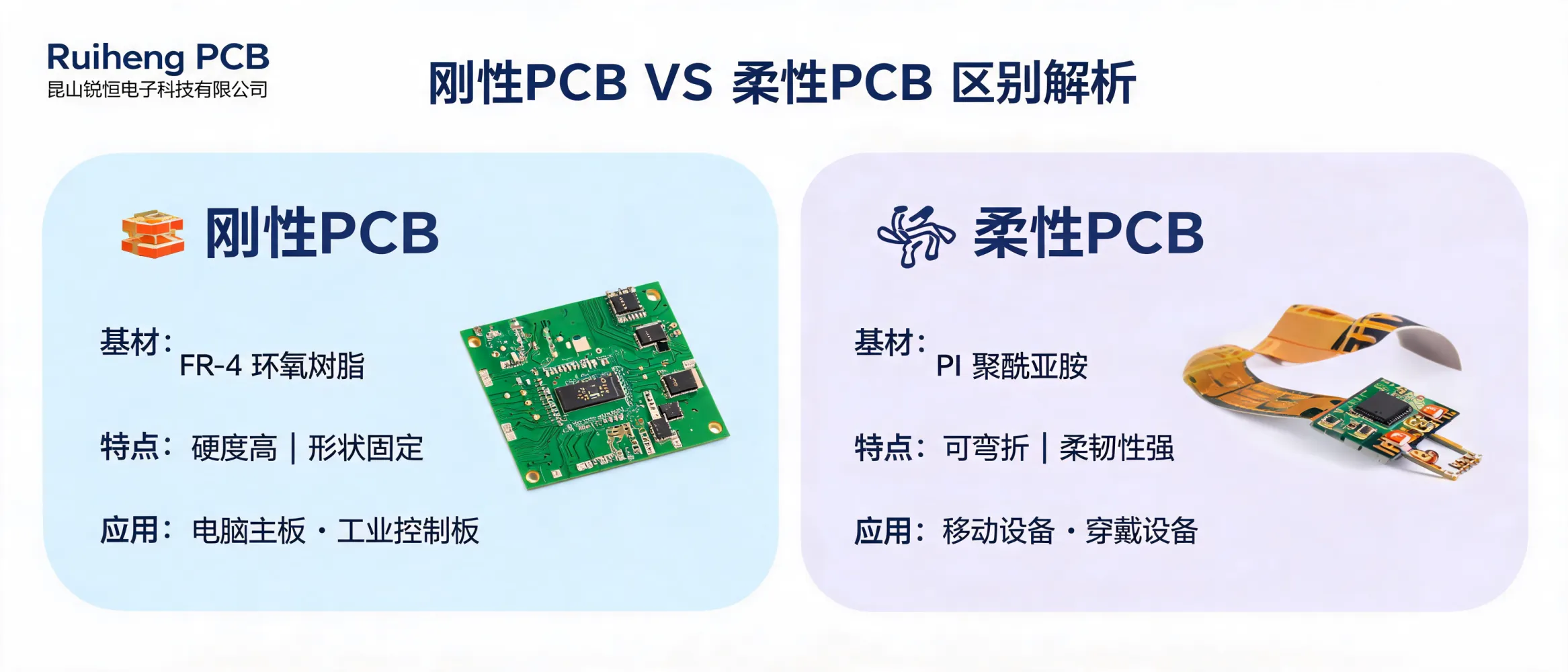
Rigid PCB and flexible PCB serve different design requirements. The primary differences relate to substrate material, mechanical structure, form factor, processing considerations, and application environment. Kunshan Ruiheng Electronic Technology Co., Ltd. provides both rigid PCB based on FR-4 and flexible PCB based on PI polyimide, supporting engineers, procurement teams, and international buyers in selecting a suitable PCB solution for product development, prototyping, and volume production.
Rigid PCB and Flexible PCB at a Glance
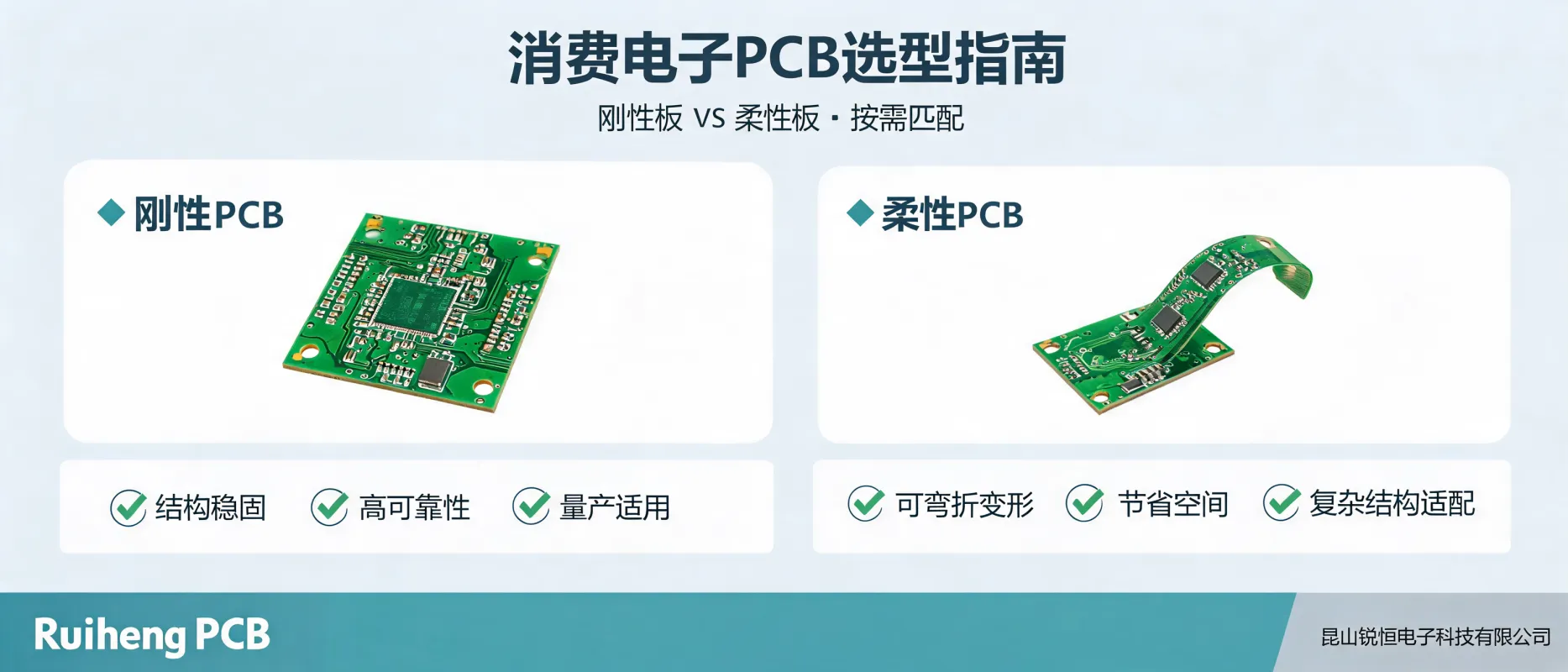
A rigid PCB maintains a fixed shape during normal use and is commonly selected when the electronic assembly requires stable mechanical support. A flexible PCB is designed to bend, fold, or conform to a specific product structure, making it suitable for applications where space, movement, or three-dimensional routing is important.
| Comparison point |
Rigid PCB |
Flexible PCB |
| Typical substrate |
FR-4, a glass-reinforced epoxy laminate |
PI, also known as polyimide |
| Mechanical form |
Fixed and structurally stable |
Bendable and adaptable to product geometry |
| Design focus |
Component support, board rigidity, and stable installation |
Space utilization, movement, and three-dimensional connections |
| Common selection reason |
The product requires a conventional, stable circuit board structure |
The circuit must fit into a compact, curved, folded, or moving assembly |
What Is a Rigid FR-4 PCB?
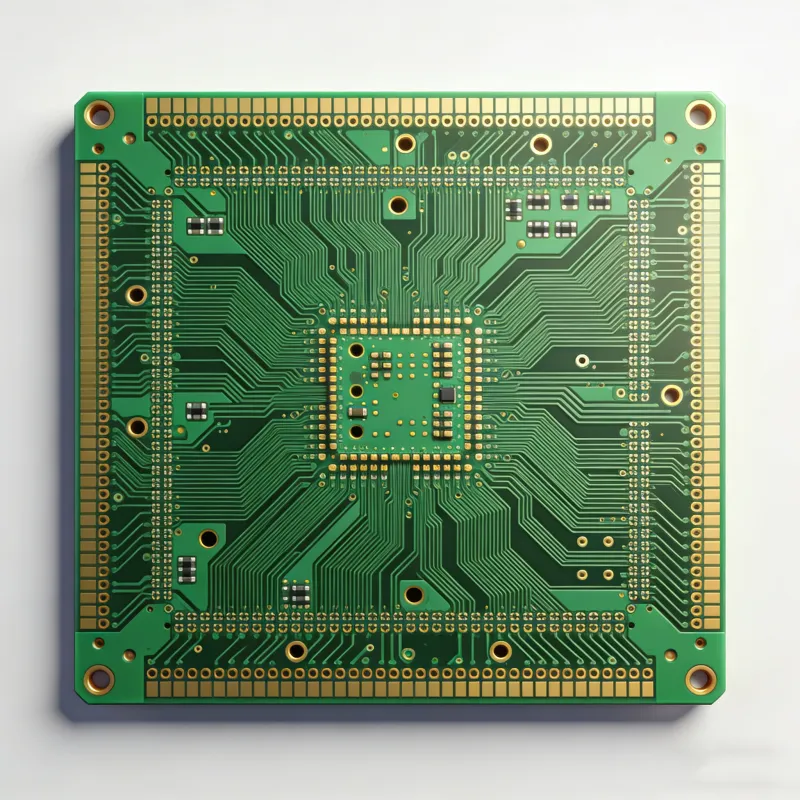
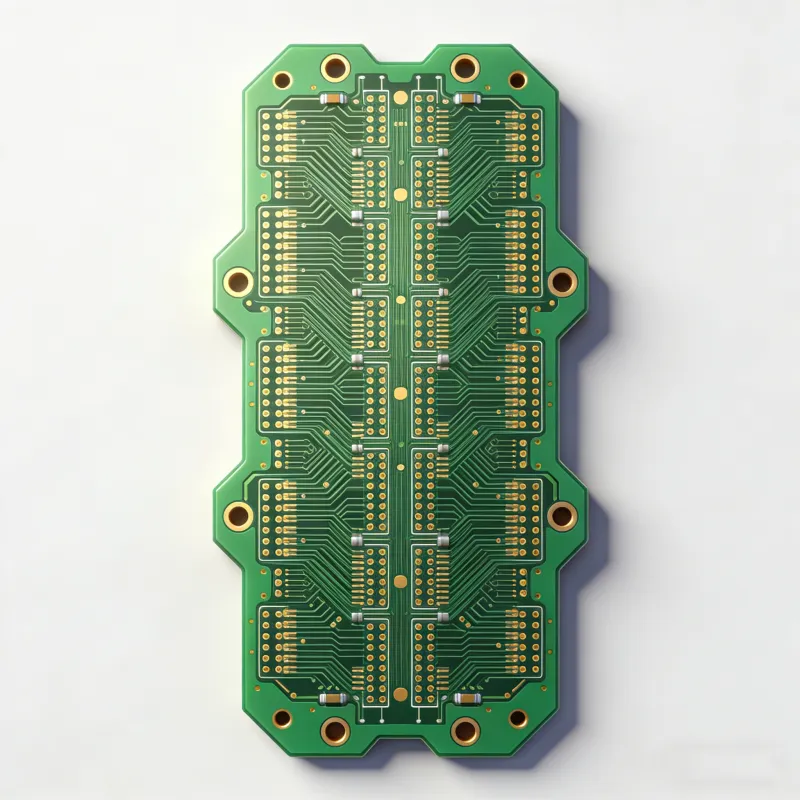
A rigid PCB uses a solid substrate that keeps the board in a defined shape. FR-4 is a widely used rigid PCB material consisting of glass reinforcement and epoxy resin. Its stable structure makes it suitable for circuit assemblies that need dependable component mounting and straightforward integration into an enclosure or mechanical support.
Rigid FR-4 PCBs are often considered for conventional electronic products, control boards, communication equipment, consumer electronics, and other designs where bending is not part of the operating requirement.
What Is a Flexible PI PCB?
A flexible PCB uses a flexible polyimide, or PI, substrate. Instead of remaining flat and rigid, the circuit can be routed through a curved or folded product space. This characteristic can help connect separate areas of an assembly while accommodating compact layouts or limited installation space.
Flexible PI PCBs are generally evaluated for products that require bendable interconnections, reduced wiring complexity, or circuit routing around mechanical structures. The permitted bend conditions must be defined according to the actual design and assembly requirements.
Key Structural and Processing Differences
PCB selection should not be based on material names alone. The board structure, installation method, bending behavior, component arrangement, and production requirements should be reviewed together.
-
Substrate behavior: FR-4 provides a fixed and stable board structure, while PI supports flexible routing and conformal installation.
-
Mechanical design: Rigid boards are normally installed on a defined plane. Flexible boards may be shaped to follow bends, folds, or other available space within the product.
-
Bending requirements: A flexible PCB design should specify whether the board is intended for static bending during installation or repeated dynamic movement during operation.
-
Component and assembly planning: Component placement, stiffener requirements, connection areas, bend zones, and assembly sequence should be considered during the engineering stage.
-
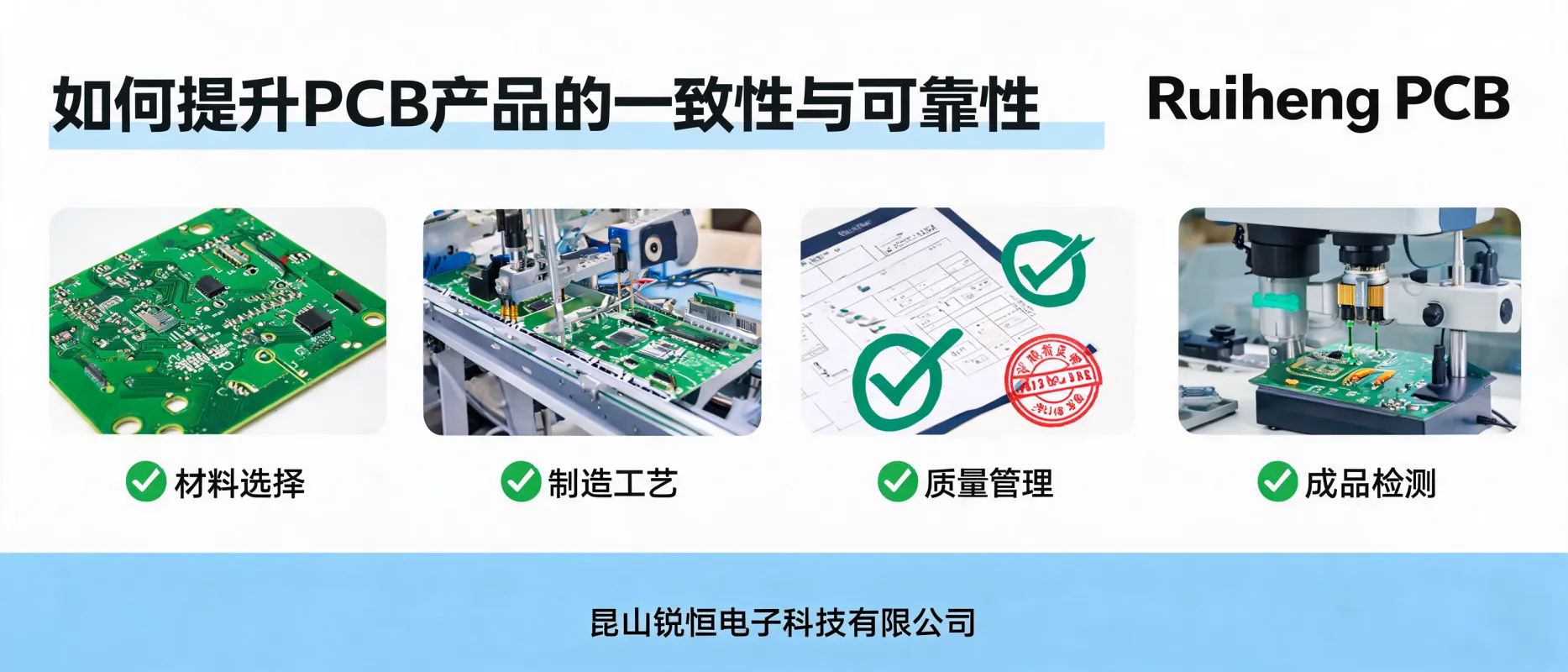
Manufacturing communication: Clear drawings, material requirements, layer information, dimensional tolerances, and application conditions help the manufacturer evaluate feasibility and maintain production consistency.
Typical Application Considerations
When rigid PCB may be suitable
- The circuit requires a fixed board shape.
- Components need stable mechanical support.
- The product provides sufficient flat installation space.
- Conventional board integration is preferred.
When flexible PCB may be suitable
- The circuit must fit a curved or folded space.
- The product requires bendable interconnections.
- Available installation space is limited.
- The design includes movement or three-dimensional routing.
How to Select Between Rigid PCB and Flexible PCB
For engineers and purchasing teams, the most practical selection process begins with the product structure rather than the PCB category. Review the following questions before requesting a quotation or starting production planning:
- Does the board need to remain flat and mechanically stable, or must it bend and conform to the assembly?
- Is the bending requirement limited to installation, or will the circuit experience repeated movement?
- What are the required board dimensions, layer structure, connection areas, and component locations?
- What environmental and assembly conditions should the PCB withstand in the intended product?
- Is the project at the prototype stage, or does it require a stable process for medium- or high-volume production?
Important design note: A flexible PCB should not be treated as a direct replacement for every rigid PCB. Its suitability depends on the required bending mode, available space, connection design, assembly method, and product operating conditions. Early communication between the buyer, design team, and PCB manufacturer can help define an appropriate structure.
PCB Solutions from Kunshan Ruiheng
Kunshan Ruiheng Electronic Technology Co., Ltd. focuses on the research, production, and export of rigid FR-4 PCBs and flexible PI polyimide PCBs. Based in the Yangtze River Delta PCB manufacturing region, the company supports customers with engineering coordination, quality-focused production, and PCB solutions for different project stages.
With capabilities covering small-batch prototyping through medium- and larger-volume production, Kunshan Ruiheng works with international customers across Europe, the Americas, Southeast Asia, and the Middle East. Its approach is grounded in quality as the foundation and technology as the driver, with attention to product reliability, precision, consistency, and project-specific requirements.
Rigid FR-4 PCB
Flexible PI PCB
Prototype to volume production
International B2B support


-1.png?x-oss-process=image/resize,m_fill,h_800,w_800/format,webp)