Kunshan Ruiheng Electronic Technology Co., Ltd.
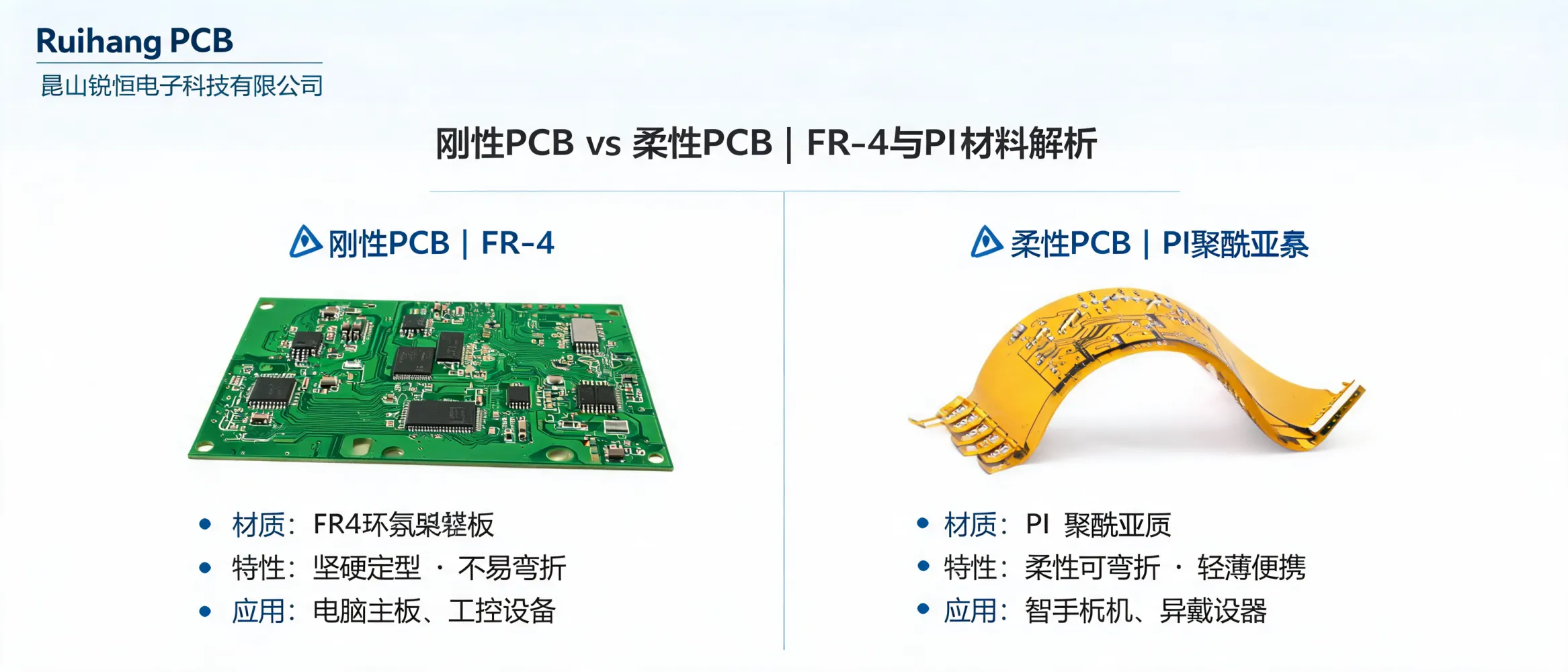
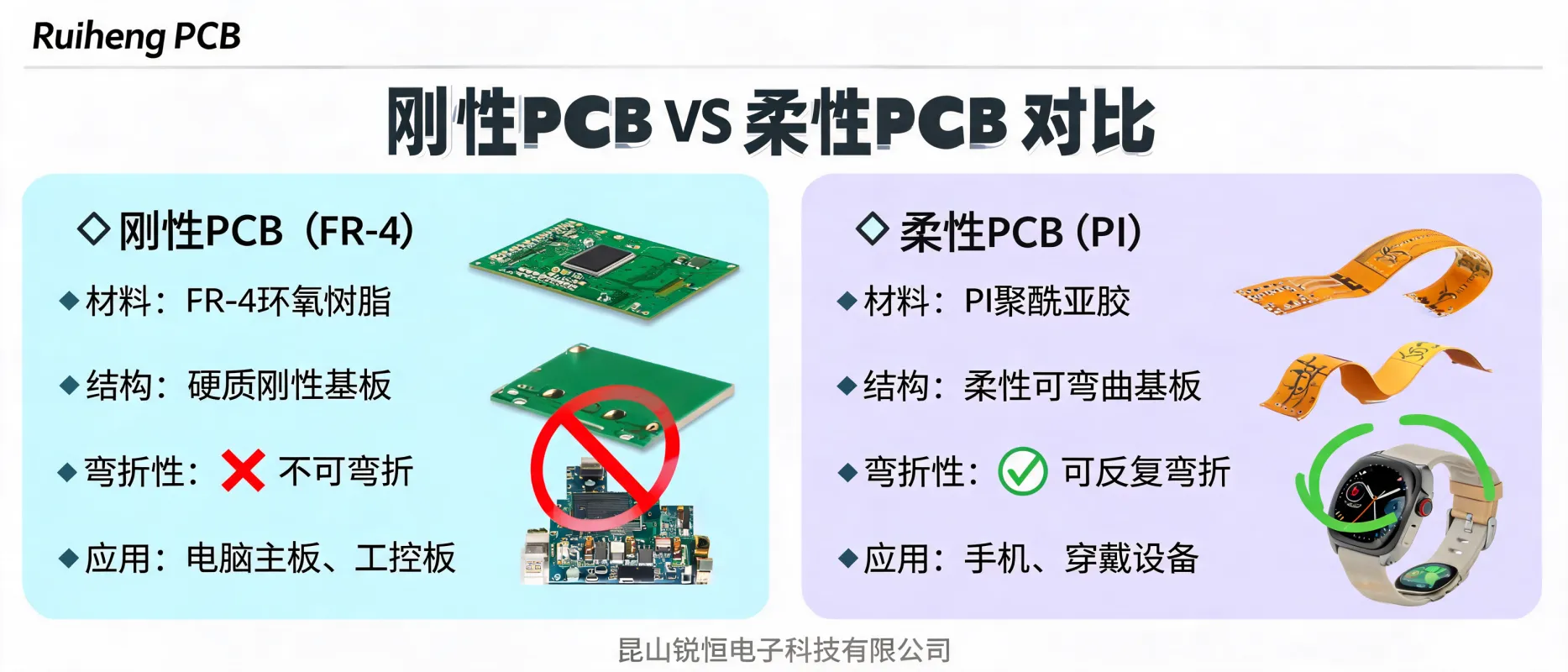
In PCB selection, the difference between rigid PCB and flexible PCB is not only about whether the board can bend. It also involves substrate choice, structural design, mechanical behavior, installation space, and the level of reliability required by the final application. Kunshan Ruiheng Electronic Technology Co., Ltd. focuses on the development and manufacturing of FR-4 rigid PCB and PI polyimide flexible PCB, supporting B2B electronics customers with product selection and custom manufacturing discussions for global projects.
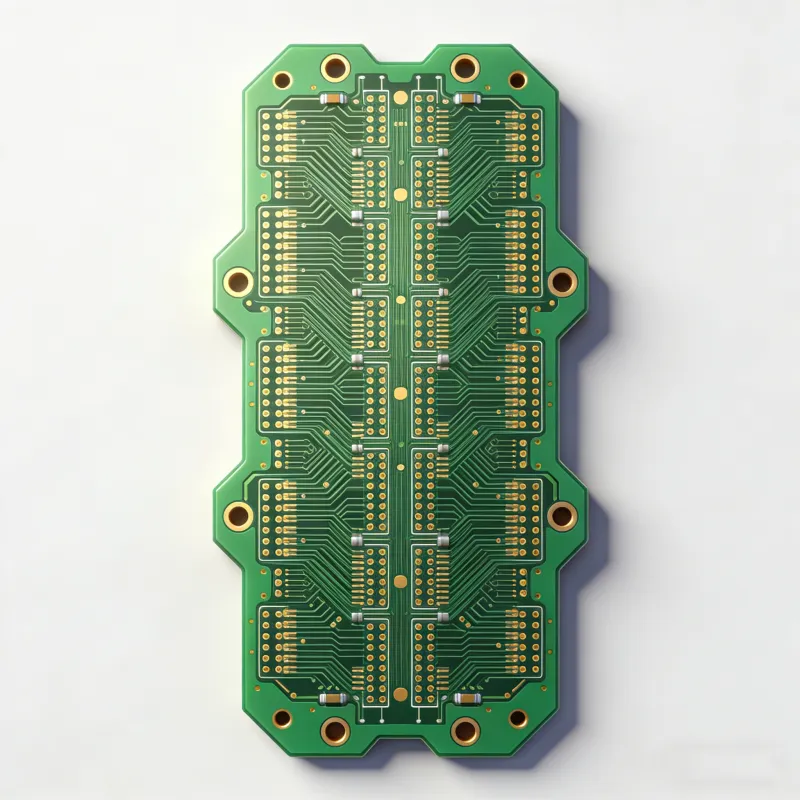
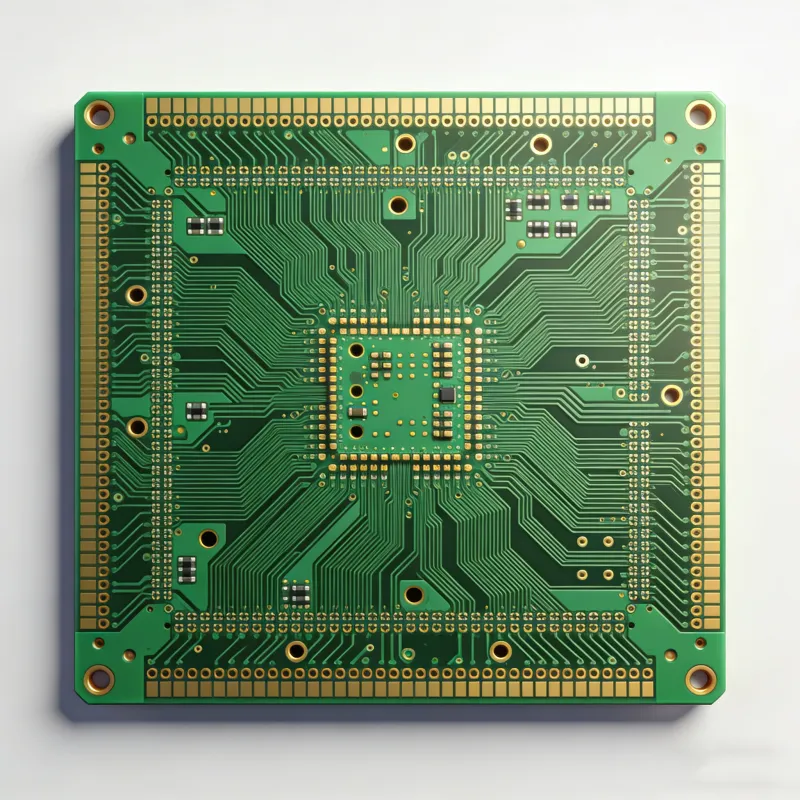
A rigid PCB is built on a stable base material that is designed to maintain its shape during assembly and use. For many electronic products, FR-4 is the common substrate because it offers a balanced combination of electrical insulation, mechanical strength, and process compatibility.
Rigid PCBs are typically used when the circuit board must stay fixed in place, support components firmly, and deliver reliable performance in standard assembly structures.
A flexible PCB is designed on a bendable substrate, most commonly PI polyimide. Compared with a rigid board, it can fit into compact assemblies, follow curved paths, and support movement or repeated bending within its designed range.
Flexible PCB solutions are often selected when space efficiency, dynamic routing, or weight reduction is important to the product structure.
| Comparison point | Rigid PCB | Flexible PCB |
|---|---|---|
| Base material | FR-4 | PI polyimide |
| Mechanical behavior | Maintains a fixed shape | Designed to bend within application limits |
| Space usage | Suitable for stable mounting areas | Useful in compact, curved, or movable layouts |
| Application focus | Structural support and stable assembly | Routing flexibility and space optimization |
| Selection logic | Choose when rigidity and installation stability are priorities | Choose when bending, folding, or fit-to-space design is required |
When rigid PCB is a practical choice
When flexible PCB becomes more suitable
As a manufacturer rooted in the East China PCB industrial cluster, Kunshan Ruiheng combines production capability with engineering support to serve global B2B customers across Europe, Southeast Asia, the Middle East, and other international markets.
Material options: FR-4 rigid PCB and PI-based flexible PCB solutions.
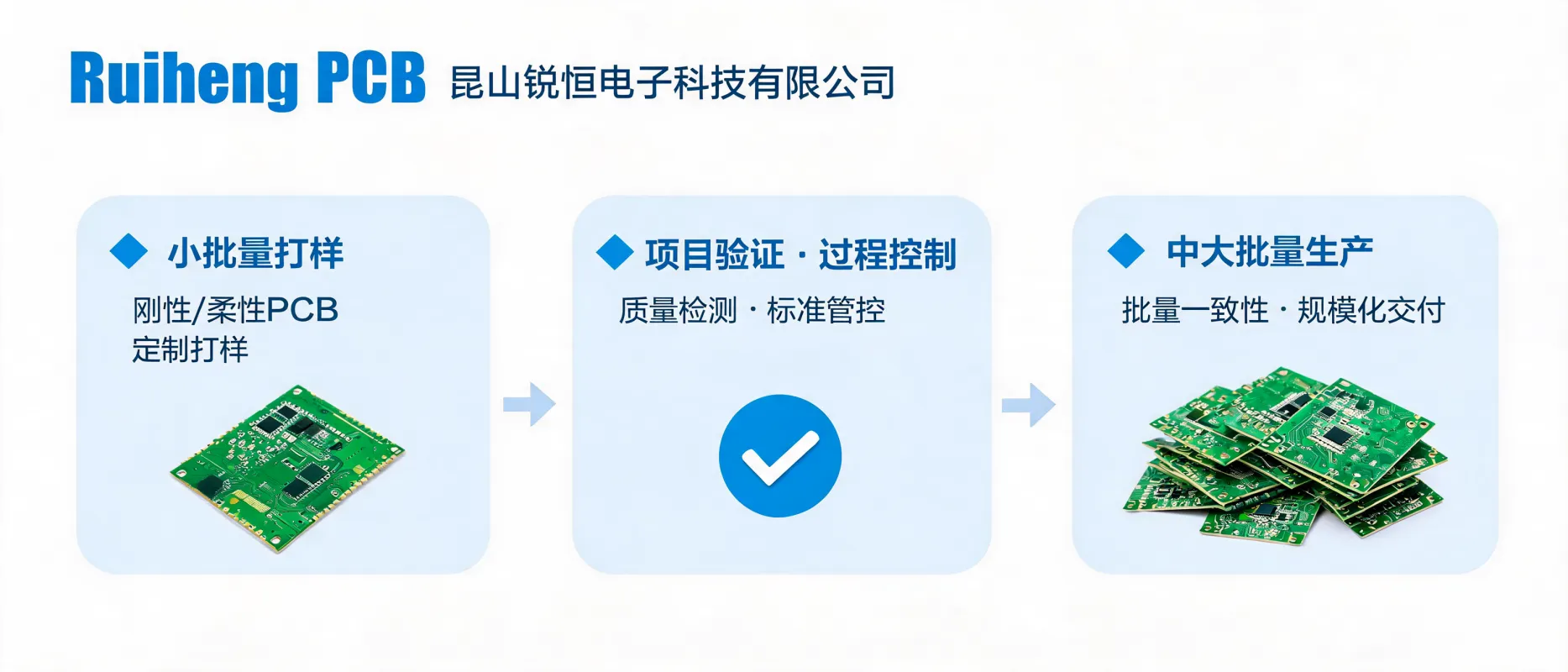
Manufacturing scope: from small-batch prototyping to medium and large batch production.
Quality focus: high reliability, high precision, and consistent output supported by a strict quality management system.
Engineering support: practical guidance for early-stage PCB selection and custom design alignment.
If your project needs a board that stays fixed and supports stable assembly, a rigid PCB is often the natural starting point.
If your design must bend, fold, or fit into a constrained space, a flexible PCB may be more appropriate.
In many real projects, the best decision comes from matching the board structure to the product’s mechanical layout, electrical requirements, and production needs.
For B2B electronics buyers, designers, and procurement teams, choosing between rigid PCB and flexible PCB is an important step in product development. With FR-4 and PI/polyimide manufacturing capabilities, Kunshan Ruiheng Electronic Technology Co., Ltd. supports custom PCB discussions with a focus on quality, technical clarity, and dependable delivery for international business needs.
 483
|
483
|
 Kunshan Ruiheng Electronic Technology Co., Ltd.
PCB project experience
consumer electronics PCB
PCB engineering collaboration
small-batch prototyping
PCB mass delivery
351
|
rigid PCB
FR-4
circuit board definition
consumer electronics
Kunshan Ruiheng Electronic Technology Co., Ltd.
184
|
Kunshan Ruiheng
PCB reliability
PCB consistency
PCB quality control
batch delivery
140
|
rigid PCB
flexible PCB
FR-4
PI polyimide
Ruiheng Electronics
144
|
Kunshan Ruiheng Electronic Technology Co., Ltd.
PCB custom delivery
small-batch prototyping
mid-volume production
batch consistency
Kunshan Ruiheng Electronic Technology Co., Ltd.
PCB project experience
consumer electronics PCB
PCB engineering collaboration
small-batch prototyping
PCB mass delivery
351
|
rigid PCB
FR-4
circuit board definition
consumer electronics
Kunshan Ruiheng Electronic Technology Co., Ltd.
184
|
Kunshan Ruiheng
PCB reliability
PCB consistency
PCB quality control
batch delivery
140
|
rigid PCB
flexible PCB
FR-4
PI polyimide
Ruiheng Electronics
144
|
Kunshan Ruiheng Electronic Technology Co., Ltd.
PCB custom delivery
small-batch prototyping
mid-volume production
batch consistency








-4.png?x-oss-process=image/resize,m_fill,h_800,w_800/format,webp)
-1.png?x-oss-process=image/resize,m_fill,h_800,w_800/format,webp)