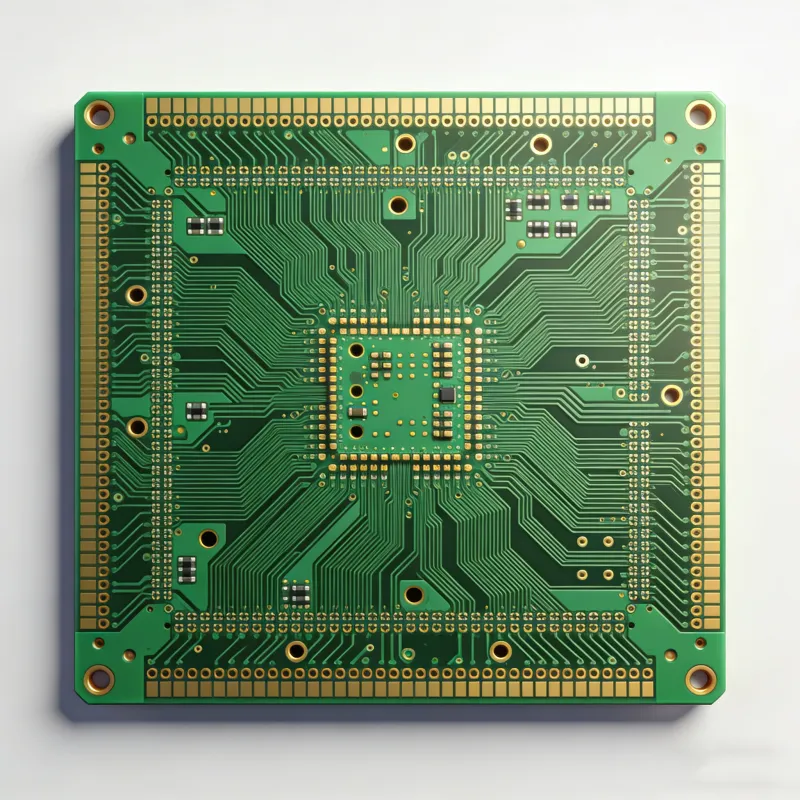
Choosing between a rigid PCB and a flexible PCB is an important step in electronics design. The right board type affects product size, structural stability, routing freedom, assembly process, and long-term reliability. As a manufacturer specializing in FR-4 rigid PCB and PI polyimide flexible PCB, Kunshan Ruiheng Electronic Technology Co., Ltd. supports B2B customers with practical, application-oriented PCB solutions.
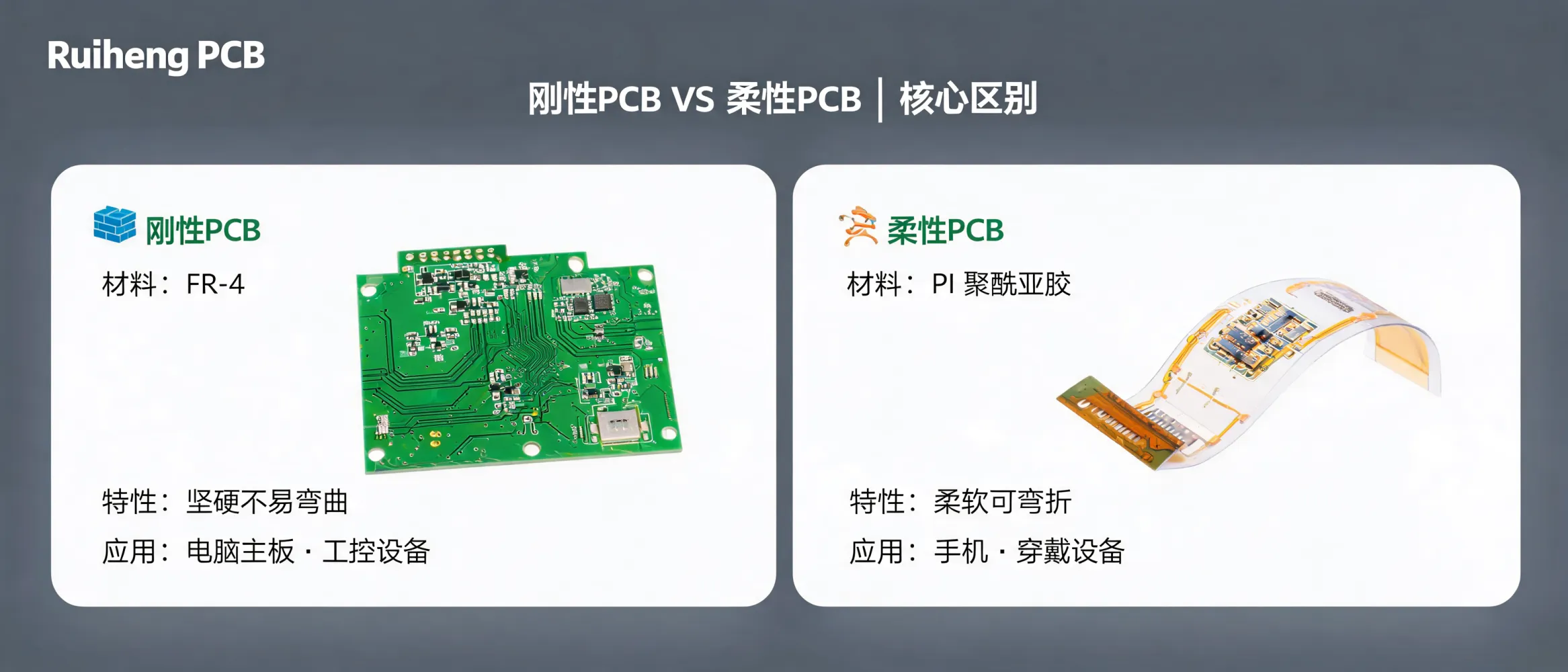
Rigid PCB and flexible PCB serve different design purposes. A rigid board is built for mechanical stability and precise component support, while a flexible board is designed to bend, fold, or fit into compact structures. Understanding these differences helps procurement teams, R&D engineers, and project managers select the most suitable solution for their product.
| Comparison Item | Rigid PCB | Flexible PCB |
|---|---|---|
| Typical Material | FR-4 | PI / polyimide |
| Structure | Hard and dimensionally stable | Thin, bendable, and space-saving |
| Processing Focus | Stability, drilling accuracy, and repeatability | Flexibility, routing adaptability, and foldability |
| Common Use Cases | Modules requiring firm support and stable assembly | Compact products, moving parts, and space-constrained designs |
Rigid PCB is the most widely used board type in many electronic products. Built on FR-4 substrate, it provides stable mechanical support for components and reliable circuit performance in standard assembly environments.
For projects that require clear board shape, high assembly consistency, and dependable electrical interconnection, rigid PCB is often the preferred choice. At Kunshan Ruiheng Electronic Technology Co., Ltd., rigid PCB production is aligned with quality control requirements for consistent output across small-batch prototyping and medium-to-large batch manufacturing.
Flexible PCB uses PI / polyimide as the core material and is designed for products that need to bend, fold, or fit into limited installation space. Compared with rigid boards, flexible PCB offers greater design freedom in layouts where mechanical movement, repeated bending, or compact packaging is required.
Flexible PCB is commonly considered when the product architecture places higher demands on space utilization, interconnect routing, and structural integration. Ruiheng Electronic supports flexible PCB manufacturing with attention to precision, consistency, and process control to better match application requirements.
A practical PCB selection should start from the product structure, assembly method, and expected usage environment. The following points can help guide early decision-making:
Specialized in rigid PCB and flexible PCB manufacturing, with a clear product boundary and strong application focus.
An experienced technical team helps align material choice, structure, and processing with project requirements.
Advanced equipment and strict quality management are applied to support high reliability and consistency.
Products are supplied to customers in Europe, the Americas, Southeast Asia, and the Middle East.
Kunshan Ruiheng Electronic Technology Co., Ltd. serves international B2B buyers seeking dependable PCB manufacturing for diverse electronics projects. Whether the requirement is for a rigid PCB with stable structure or a flexible PCB with greater design adaptability, product selection should always be driven by application logic rather than board type alone.
Quality first, technology driven. This principle guides the company’s approach to PCB manufacturing, helping customers build solutions that are practical, consistent, and suitable for real-world deployment.
 116
|
116
|
 Kunshan Ruiheng Electronic Technology Co., Ltd.
PCB procurement
supplier evaluation
delivery acceptance
procurement risks
207
|
high-frequency pcb
24 layer pcb
3mil trace width
dense routing
low signal loss
140
|
rigid PCB
flexible PCB
FR-4
PI polyimide
Ruiheng Electronics
433
|
Kunshan Ruiheng
PCB selection
consumer electronics
rigid PCB
flexible PCB
337
|
Kunshan Ruiheng
small-batch prototyping
medium- and large-volume production
PCB project delivery
quality management
Kunshan Ruiheng Electronic Technology Co., Ltd.
PCB procurement
supplier evaluation
delivery acceptance
procurement risks
207
|
high-frequency pcb
24 layer pcb
3mil trace width
dense routing
low signal loss
140
|
rigid PCB
flexible PCB
FR-4
PI polyimide
Ruiheng Electronics
433
|
Kunshan Ruiheng
PCB selection
consumer electronics
rigid PCB
flexible PCB
337
|
Kunshan Ruiheng
small-batch prototyping
medium- and large-volume production
PCB project delivery
quality management










-L4-4.png?x-oss-process=image/resize,m_fill,h_800,w_800/format,webp)
-4.png?x-oss-process=image/resize,m_fill,h_800,w_800/format,webp)