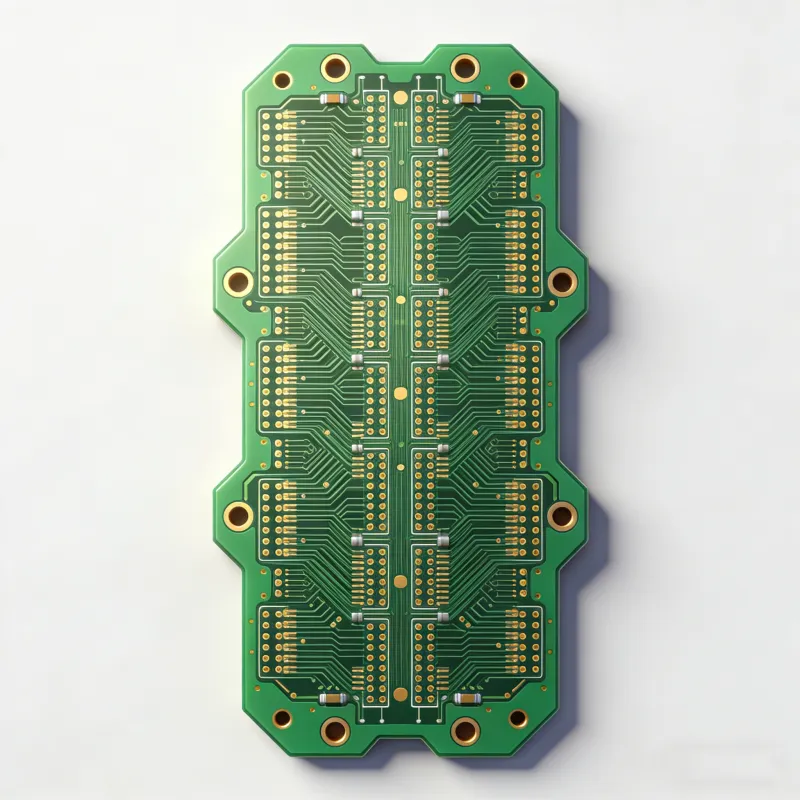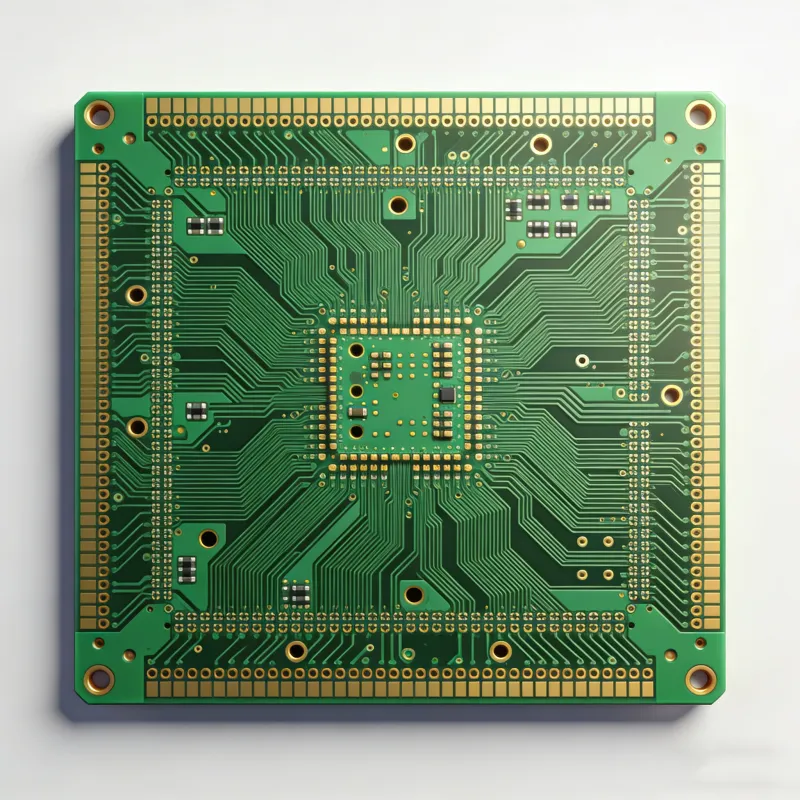
In the realm of power electronics, the fabrication of thick copper printed circuit boards (PCBs) with 4 oz copper layers and above remains a critical challenge. The precision of etching and the integrity of solder mask application are pivotal factors influencing product reliability and longevity. This article dissects the advanced techniques employed to ensure uniform copper layer etching while mitigating common process pitfalls, offering actionable insights rooted in real-world applications such as the Emerson project in the Philippines.
Thick copper etching involves intricate fluid dynamics management within the etchant bath. One primary hurdle is achieving consistent copper removal rates across the entire PCB surface. Variations in etchant flow velocity can cause uneven etching, leading to localized copper over-etch or insufficient pattern definition, especially critical for 0.3mm fine trace widths.
To address this, optimizing the etchant flow speed to approximately 0.8-1.2 m/s ensures homogenous chemical reaction rates. Additionally, maintaining a controlled temperature gradient within ±2°C across the bath minimizes reaction rate deviations. Temperature control systems leveraging PID controllers and flow distributors have proven effective in stabilizing these parameters.
Achieving precise 0.3mm line spacing and drilling vias as small as 0.5mm demands advanced photolithography paired with refined drilling methods. Process adjustments including controlled exposure times and photoresist formulations tailor etch resist capability to withstanding prolonged etching without compromising dimensional fidelity.
Drilling microvias at these dimensions often involves laser drilling combined with mechanical drilling to minimize burr formation and prevent via wall delamination. Process monitoring leveraging inline optical inspection ensures repeatability within ±10 microns.
The choice of solder mask directly impacts long-term durability under harsh operating temperatures common in power electronics. Epoxy-based liquid photoimageable solder masks (LPI) with enhanced cross-link density provide superior adhesion and thermal resistance, rated up to 250°C for extended periods.
Optimized application via spin coating or curtain coating ensures uniform coverage over thick copper profiles, preventing peel-off due to mechanical stress or thermal cycling—frequent failure points observed during reliability testing.
Copper blistering and solder mask delamination predominantly arise from trapped moisture, hydrogen embrittlement during etching, or uneven drying post-coating. Process controls such as extended pre-bake cycles, ultrasonically enhanced etchant agitation, and controlled humidity drying chambers dramatically reduce these defect rates.
Electroless Nickel Immersion Gold (ENIG) surface treatment enhances corrosion resistance and solderability, imperative for high-density assemblies where 0.5mm microvias support thermal dissipation and mechanical stress relief. High-quality ENIG coatings prevent nickel oxidation that can lead to brittle solder joints, bolstering long-term PCB reliability.
Moreover, optimized via plating thickness of 12-18 microns ensures mechanical stress tolerance during component placement and thermal cycling, a critical factor in power module performance.
As one of the industry's leading providers, Shengyi Thick Copper PCB has successfully supported global power supply manufacturers with refined etching and solder mask processes that meet stringent quality standards. Interested in elevating your thick copper PCB production capabilities?
 348
|
348
|
 High - speed multilayer PCB
Impedance control
5G communication PCB
Signal integrity
High - frequency PCB manufacturing
53
|
high-density FPC routing
flexible PCB design techniques
EMI optimization in FPC
precision via design for flexible circuits
FPC manufacturing process
305
|
High - frequency PCB impedance control
High - speed multilayer PCB design
Signal integrity optimization
5G base station PCB
High - performance dielectric materials
182
|
high-frequency multilayer PCB
impedance control technology
5G base station PCB design
high-speed telecom PCB
AOI inspection
298
|
FPC high - density wiring
Flexible circuit board design skills
Electromagnetic compatibility optimization
Signal crosstalk protection
High - reliability FPC manufacturing
High - speed multilayer PCB
Impedance control
5G communication PCB
Signal integrity
High - frequency PCB manufacturing
53
|
high-density FPC routing
flexible PCB design techniques
EMI optimization in FPC
precision via design for flexible circuits
FPC manufacturing process
305
|
High - frequency PCB impedance control
High - speed multilayer PCB design
Signal integrity optimization
5G base station PCB
High - performance dielectric materials
182
|
high-frequency multilayer PCB
impedance control technology
5G base station PCB design
high-speed telecom PCB
AOI inspection
298
|
FPC high - density wiring
Flexible circuit board design skills
Electromagnetic compatibility optimization
Signal crosstalk protection
High - reliability FPC manufacturing





-4.png?x-oss-process=image/resize,m_fill,h_800,w_800/format,webp)