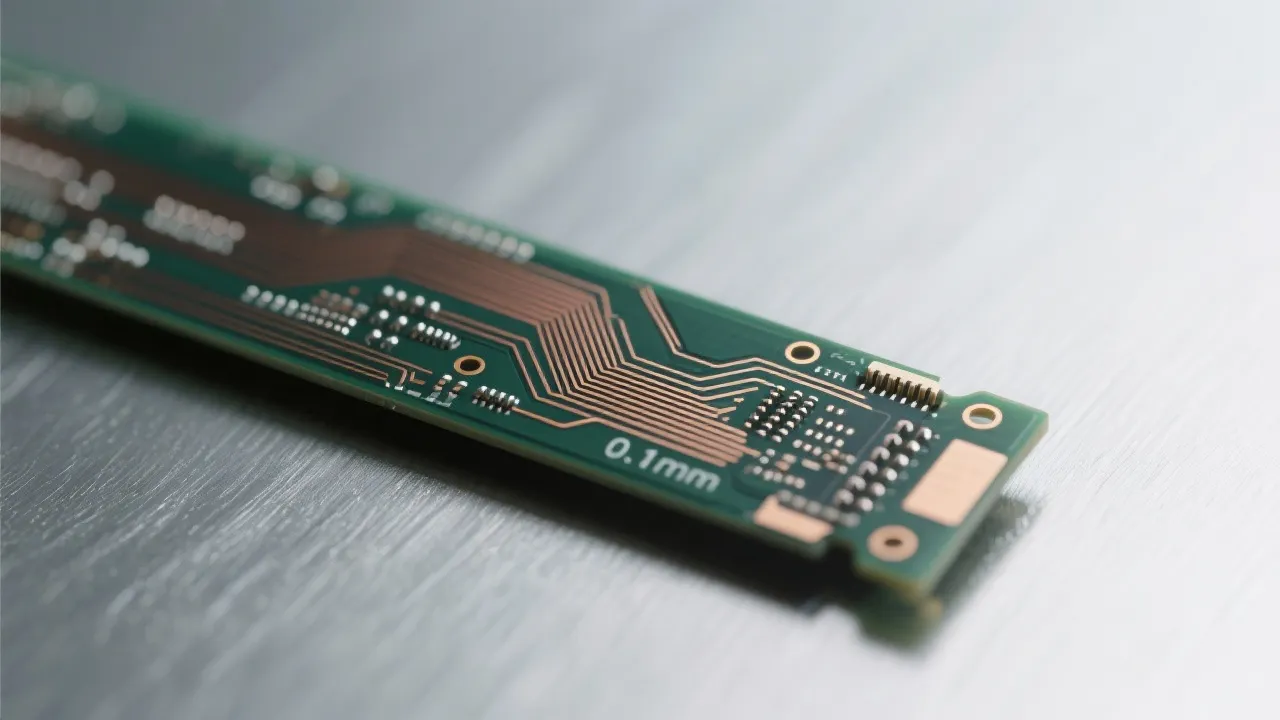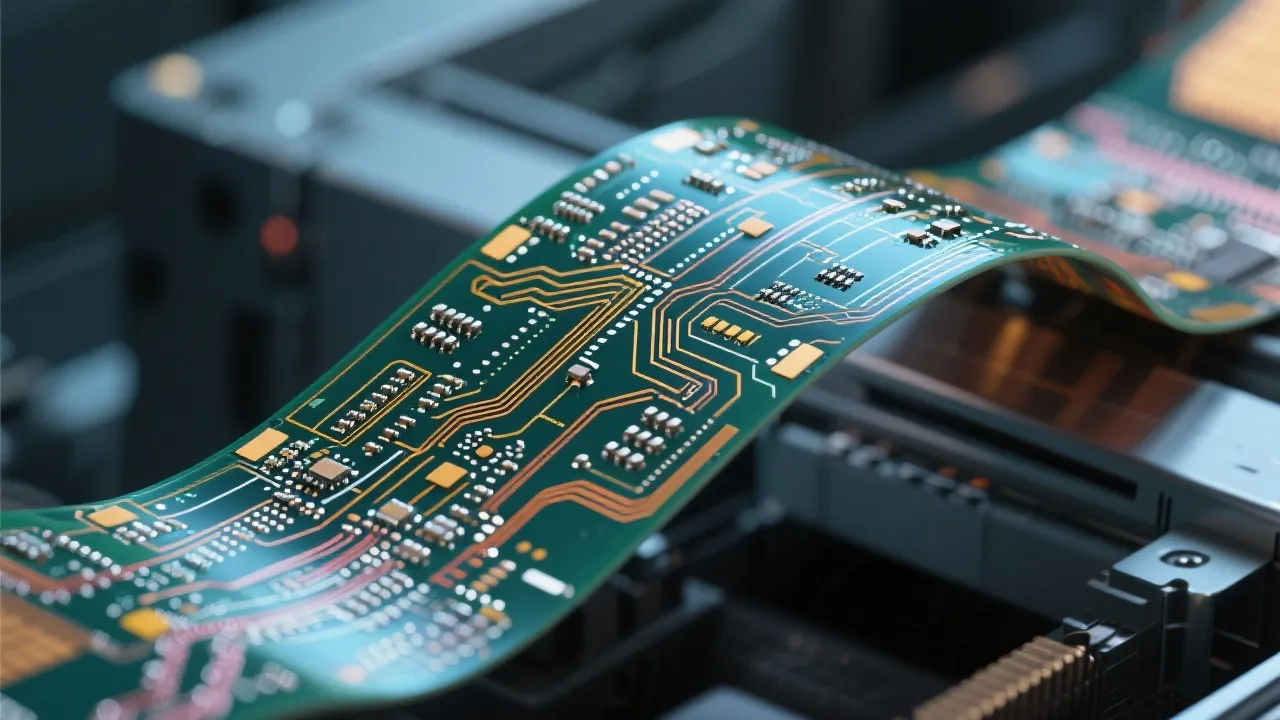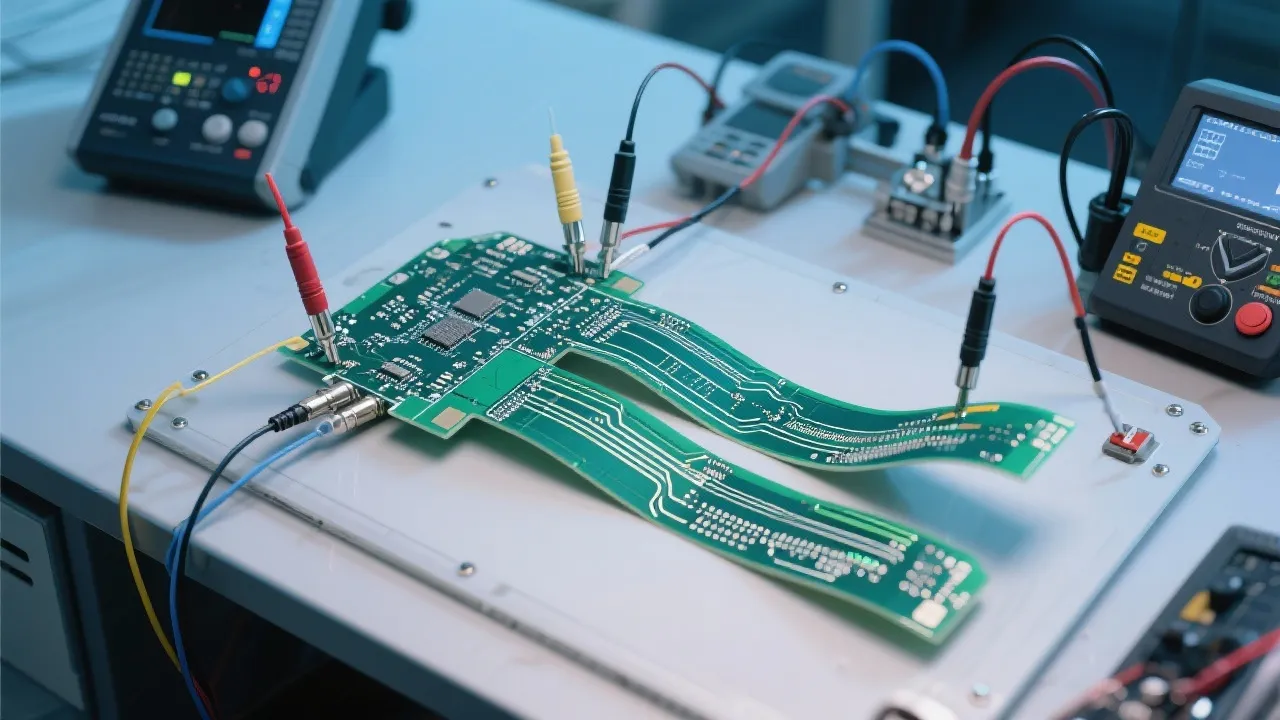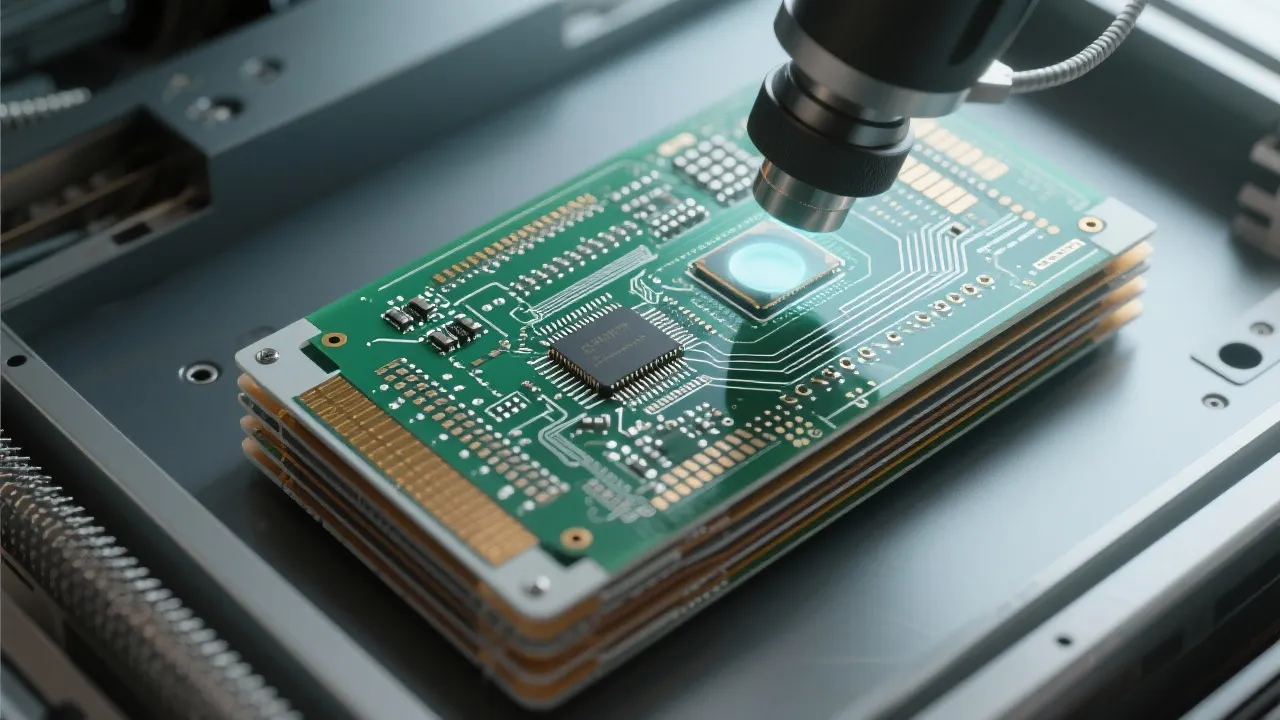
For PCB designers working on high-frequency applications—especially those targeting 2.4 GHz and above—the choice of trace width is not just a matter of routing efficiency; it's a foundational element that directly impacts signal integrity, impedance control, thermal performance, and electromagnetic compatibility (EMC). In a 24-layer stackup, where signal layers are often sandwiched between power and ground planes, improper trace sizing can lead to crosstalk, reflections, and even system-level failures.
At frequencies exceeding 500 MHz, the skin effect becomes dominant, meaning current flows primarily near the surface of the conductor. This increases effective resistance and makes trace width selection critical for maintaining consistent characteristic impedance (typically 50Ω or 90Ω for differential pairs).
Using empirical data from industry-standard tools like SIwave and HyperLynx, we observe that reducing trace width from 5 mil to 3 mil in a 24-layer board increases insertion loss by approximately 0.3 dB per inch at 2.4 GHz—a difference that accumulates significantly over long traces. For example:
| Trace Width | Insertion Loss @ 2.4 GHz | Impedance Deviation |
|---|---|---|
| 5 mil | ~0.2 dB/inch | ±3% |
| 3 mil | ~0.5 dB/inch | ±7% |
These figures underscore why many leading PCB manufacturers—including Ruiheng PCB—recommend using minimum widths of 4–5 mil for critical high-speed signals in 24-layer designs. However, this must be balanced against layer density and routing congestion, especially when dealing with microstrip or stripline configurations.
A well-optimized 24-layer stackup should minimize loop inductance and provide controlled impedance throughout. A typical structure might look like this:
This arrangement ensures tight coupling between signal and return paths, reducing EMI and improving signal fidelity. When combined with proper via stitching and plane segmentation, such a design can reduce radiated emissions by up to 15 dB compared to poorly layered boards.
The dielectric constant (Dk) and loss tangent (Df) of your substrate material play a major role in determining how effectively you can implement fine lines like 3 mils without compromising performance. For instance:
FR-4 (standard) has a Dk of ~4.4 and Df of ~0.02, limiting its use for signals above 10 GHz. Advanced materials like Rogers RO4350B (Dk=3.48, Df=0.003) or Isola IS680 (Dk=3.6, Df=0.002) allow reliable 3-mil trace implementation while preserving signal integrity.
Thermal management also demands attention: narrower traces dissipate heat less efficiently. In one real-world case study involving a 24-layer RF module, increasing trace width from 3 mil to 4 mil reduced hotspot temperatures by 8°C under continuous load—an improvement that enhanced long-term reliability and reduced field failure rates.
If you're designing for industrial automation, aerospace, or telecom equipment, these details aren't optional—they're essential. And they’re exactly what sets apart a competent designer from an expert who builds systems that perform reliably under stress.
 404
|
404
|
 four-layer thick copper PCB design
power electronics PCB thermal optimization
thick copper PCB minimum trace spacing
ENIG surface finish benefits
high Tg FR-4 applications
438
|
high-speed multilayer pcb impedance control
50 ohm single ended impedance
100 ohm differential impedance
high frequency pcb design
signal integrity optimization
274
|
high-speed multilayer PCB impedance control
PCB impedance measurement techniques
AOI inspection technology
5G PCB design
high-frequency PCB manufacturing
283
|
4-layer heavy copper PCB design
power electronics thermal management
thick copper PCB line spacing
ENIG surface finish
high Tg FR-4 application
218
|
High-speed PCB impedance control
5G base station PCB design
High-frequency communication module impedance matching
High-performance dielectric material PCB
PCB signal integrity
four-layer thick copper PCB design
power electronics PCB thermal optimization
thick copper PCB minimum trace spacing
ENIG surface finish benefits
high Tg FR-4 applications
438
|
high-speed multilayer pcb impedance control
50 ohm single ended impedance
100 ohm differential impedance
high frequency pcb design
signal integrity optimization
274
|
high-speed multilayer PCB impedance control
PCB impedance measurement techniques
AOI inspection technology
5G PCB design
high-frequency PCB manufacturing
283
|
4-layer heavy copper PCB design
power electronics thermal management
thick copper PCB line spacing
ENIG surface finish
high Tg FR-4 application
218
|
High-speed PCB impedance control
5G base station PCB design
High-frequency communication module impedance matching
High-performance dielectric material PCB
PCB signal integrity





-L4-4.png?x-oss-process=image/resize,m_fill,h_800,w_800/format,webp)
-4.png?x-oss-process=image/resize,m_fill,h_800,w_800/format,webp)